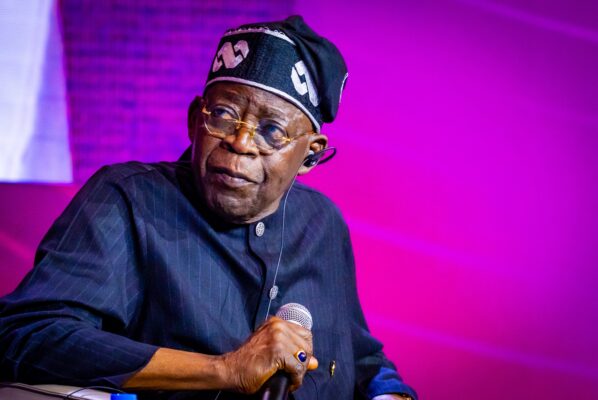
President Bola Ahmed Tinubu has said Nigeria is on the path to recovery and economic stability, three years after he assumed office amid what he described as “profound economic and structural difficulties.”
In a nationwide address to mark the third anniversary of his administration the President acknowledged the hardship caused by key policy decisions, including the removal of fuel subsidies and exchange rate reforms, but insisted they were necessary to avert a fiscal crisis.
He noted that at the peak of the subsidy regime, Nigeria spent up to ₦18.4 billion daily on petrol subsidies, amounting to over ₦4 trillion in 2022, while multiple exchange rate windows led to losses exceeding ₦8 trillion due to arbitrage and speculative practices.
Tinubu said the reforms, though painful, had begun to yield results, with improved public finances, increased investor confidence, and significant growth in the stock market.
ADVERTISEMENT
According to him, the Nigerian All Share Index has risen from 53,000 in 2023 to 250,000 in 2026, with market capitalisation increasing from ₦30 trillion to ₦160 trillion.
The President highlighted ongoing infrastructure projects across the country, including major highways such as the Lagos-Calabar Coastal Highway and the Abuja-Kaduna-Zaria-Kano Road, as well as rail modernisation efforts aimed at boosting connectivity and trade.
In the energy sector, he said reforms had attracted fresh investments, with the $5 billion NLNG Train 7 project nearing completion, while improved local refining capacity was reducing reliance on imported petroleum products.
Tinubu also pointed to interventions in agriculture, education, and housing, stating that over 1.5 million students had benefited from the Nigerian Education Loan Fund.
On housing, President Tinubu said more than 10,000 housing units were being delivered nationwide under the Renewed Hope Housing Programme.
ADVERTISEMENT
On security, the President said operations against insurgents and criminal networks had intensified, leading to safer communities and highways, although he acknowledged that challenges remain.
Addressing young Nigerians, Tinubu described them as “the engine of Nigeria’s future,” pledging continued investment in digital skills, entrepreneurship, and job creation.
He urged citizens to remain united and patient, stressing that national development requires collective sacrifice and resilience.
“We chose reform over ruin,” he said, adding that while the country is not yet where it wants to be, “the foundation for recovery has been laid.”
The President reaffirmed his administration’s commitment to reducing the cost of living, lowering transportation expenses through alternative energy adoption, and ensuring that the benefits of reforms are felt more directly by ordinary Nigerians.
ADVERTISEMENT
He concluded by calling for unity and renewed faith in the country’s future, expressing confidence that Nigeria would emerge stronger, more prosperous, and more inclusive.