
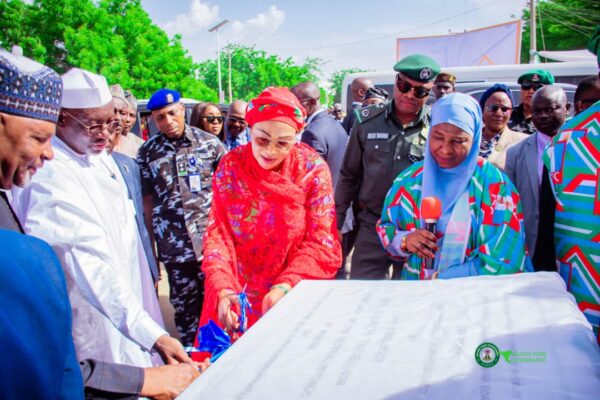
Nigeria’s First Lady, Senator Oluremi Tinubu, has commissioned a kidney disease clinic, a health technology academy, and launched the National Community Food Bank Programme in Jigawa State, in a move aimed at improving healthcare delivery, food security, and the welfare of vulnerable Nigerians.
The projects were unveiled in Hadejia, Jigawa State, as part of efforts under the Renewed Hope Agenda to address critical health and nutrition challenges facing communities across the country.
The newly inaugurated Oluremi Tinubu Clinic and Dialysis Centre, built and equipped by FutureMap Foundation in partnership with eHealth Africa, is designed to support the early detection, treatment, and prevention of chronic kidney disease, a growing public health concern in Nigeria.
Speaking at the event, Senator Oluremi Tinubu described the clinic as a life-saving intervention that will improve access to quality healthcare, especially for underserved communities.
She also commissioned the Bola Ahmed Tinubu Academy, established through the National Information Technology Development Agency (NITDA), to train young Nigerians and healthcare workers in the use of technology, data analytics, and innovation to tackle health challenges.
ADVERTISEMENT
According to the First Lady, the clinic and academy will work together to develop technology-driven solutions for the early detection and prevention of kidney disease while strengthening healthcare outcomes.
NITDA Director-General, Kashifu Inuwa, described the academy as a major milestone in Nigeria’s drive to integrate technology into healthcare delivery, research, and data management.
In a related development, Senator Tinubu formally launched the National Community Food Bank Programme for the North-West Zone, a Federal Government initiative targeted at improving access to nutritious food for children under six years, pregnant women, and nursing mothers.
Governor Umar Namadi of Jigawa State said the programme reflects the collective commitment of North-West governors to tackling food insecurity and malnutrition through community-based interventions.
The governor highlighted Jigawa’s ongoing nutrition programmes, revealing that over 382,000 children were screened for malnutrition in 2025, compared to about 245,000 in 2024.
ADVERTISEMENT
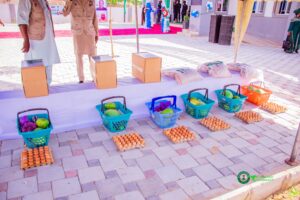
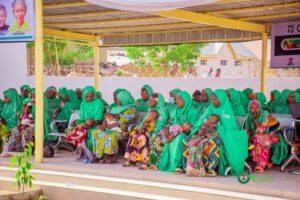
He added that the state’s intervention programmes helped increase the number of children recovering from moderate acute malnutrition from 19,000 to more than 43,000.
Governor Namadi assured the First Lady that North-West states would provide the necessary support, including storage facilities, distribution centres, and links to health institutions, to ensure the programme reaches vulnerable households.
Launching the initiative, Senator Tinubu described the Community Food Bank Programme as a sustainable response to food insecurity and malnutrition, noting that it aligns with President Bola Ahmed Tinubu’s Renewed Hope Agenda on food security, healthcare, and social protection.
The First Lady also commended the Jigawa State Government for its investment in infrastructure and human development, including key projects commissioned during her visit.
ADVERTISEMENT
The inauguration of the health facilities and food bank programme underscores growing collaboration between federal, state, and development partners to strengthen healthcare services, improve nutrition, and build more resilient communities across Nigeria.