Nigeria is drawing renewed global attention for its economic reform programme, as the World Bank described the country as a reference point for credible and consistent reform leadership.
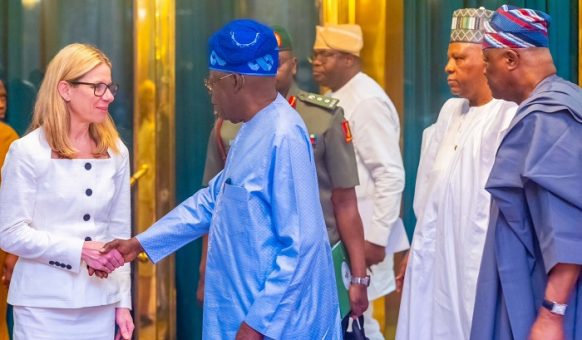
The endorsement came during a high-level meeting between President Bola Ahmed Tinubu, Vice President Kashim Shettima and the World Bank’s Managing Director of Operations, Anna Bjerde, at the Presidential Villa in Abuja.
Speaking after the meeting, Bjerde said Nigeria is now frequently cited internationally as an example of steady reform implementation, despite facing significant economic pressures and public concerns over the past two years.

She commended the Federal Government for sustaining reform momentum, noting that policy consistency and emerging positive results have helped restore confidence among investors, policymakers and the private sector.
According to her, the World Bank’s forthcoming Country Partnership Framework for Nigeria is closely aligned with the country’s development priorities, including the goal of building a one-trillion-dollar economy and achieving sustained economic growth of seven percent.
In his response, President Tinubu reaffirmed his administration’s commitment to economic reforms, stressing that there would be no reversal of policies already implemented.
The President acknowledged that the removal of fuel subsidy and the unification of the foreign exchange rates initially triggered higher inflation, but said the situation has since improved, with easing inflation, a more stable naira and growing investor confidence.
Read Also
He maintained that the reform agenda is anchored on transparency, accountability and policy stability, which he described as essential for long-term economic growth.
President Tinubu also identified agriculture as a key priority for his administration, highlighting new investments aimed at transforming the sector. He listed initiatives such as the establishment of zonal mechanisation centres, improved seed development, expanded access to fertiliser and the use of the petrochemical industry to boost agricultural productivity.
He added that efforts are underway to strengthen farmer cooperatives to enhance efficiency and market access across the country.
The President called on the World Bank to deepen its partnership with Nigeria by accelerating financing processes, reducing bureaucracy, sharing proven development models, managing risks and building local capacity to support inclusive growth.
Earlier, the Coordinating Minister of the Economy, Wale Edun, said the government remains focused on strengthening economic reforms to unlock opportunities, particularly by harnessing Nigeria’s large youth population.
With global financial institutions closely watching Nigeria’s reform trajectory, the Federal Government says it is determined to stay the course, confident that policy consistency will translate into economic stability and sustainable growth.