
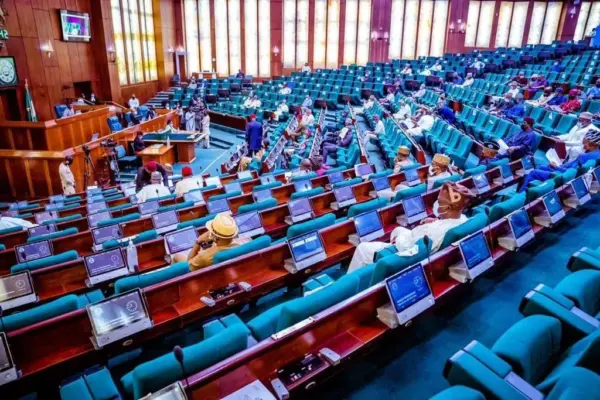
The House of Representatives has acknowledged rising concerns over the security situation in parts of the country, saying recent comments attributed to its Minority Caucus reflect genuine public anxiety and the need for sustained national response.
The position of the House was contained in a statement by the Spokesman of the House of Representatives, Rep. Akintunde Rotimi, Jr., on Friday, June 19, where it reaffirmed its commitment to collective action with the Executive Arm and security agencies in addressing evolving threats.
According to the House, Nigeria’s security challenges require coordinated and long-term interventions rather than isolated responses.
“The issues raised reflect genuine public anxieties and underscore the need for sustained vigilance, coordinated action, and continued collaboration across all arms of government,” the statement said.
It stressed that the National Assembly has continued to play its constitutional role through legislation, appropriation and oversight aimed at strengthening intelligence coordination, improving troop welfare and enhancing national preparedness.
ADVERTISEMENT
“The National Assembly, working with the Executive and security institutions, has continued to strengthen the national security framework through legislation, appropriation, and oversight aimed at improving operational effectiveness, intelligence coordination, troop welfare, and national preparedness,” it stated.
The House noted ongoing military and security operations across different parts of the country, saying reported gains in degrading criminal networks and rescuing abducted persons should be acknowledged alongside existing challenges.
It said: “While challenges persist in some areas, these outcomes point to steady progress that must be consolidated.”
The lawmakers urged that public discourse on security should be guided by context and balanced assessment of both progress and setbacks.
“Public discourse on security must remain anchored on a balanced appreciation of context, trends, and historical developments,” it added.
ADVERTISEMENT
Reacting to concerns raised by the Minority Caucus, the House emphasised that all lawmakers, regardless of political affiliation, have constitutional tools to influence national security outcomes.
It listed such instruments to include bills, motions, oversight functions, appropriation powers and constituency engagements.
Read Also
“Members of Parliament, irrespective of party affiliation, are not limited to public commentary. We are equipped with constitutionally recognised instruments: Bills, Motions, Committee Oversight, Appropriation Powers, and constituency engagement mechanisms which enable direct participation in shaping national responses and reforms,” the statement read.
The House also reminded lawmakers that they collectively share responsibility for national security outcomes.
“Parliament collectively bears responsibility for lawmaking, oversight, and appropriation, and is therefore jointly accountable for strengthening national security outcomes,” it said.
ADVERTISEMENT
It further encouraged legislators to channel concerns into actionable proposals within the legislative framework.
“Constructive parliamentary engagement is most impactful when concern is matched with actionable proposals capable of legislative consideration,” it stated.
House Leader, Rt. Hon. Julius Ihonvbere, CON, in the statement, described security as a shared responsibility beyond political divisions.
“Security remains a shared national responsibility that transcends political affiliation. Our duty as Parliament is not only to express concern but to ensure such concerns are translated into effective legislative and oversight actions that strengthen national security,” he said.
He added that unity of purpose within the legislature remains critical.
ADVERTISEMENT
“The strength of the House lies in its unity of purpose, even amid differing perspectives. Majority or Minority, we are bound by the same constitutional responsibility to the Nigerian people,” he said.
The House acknowledged the impact of insecurity on communities across the country, including threats to livelihoods and safety in rural areas, but reiterated its commitment to sustained collaboration with all stakeholders.
It maintained that lasting solutions to Nigeria’s security challenges would require institutional discipline, inter-agency coordination and collective resolve.