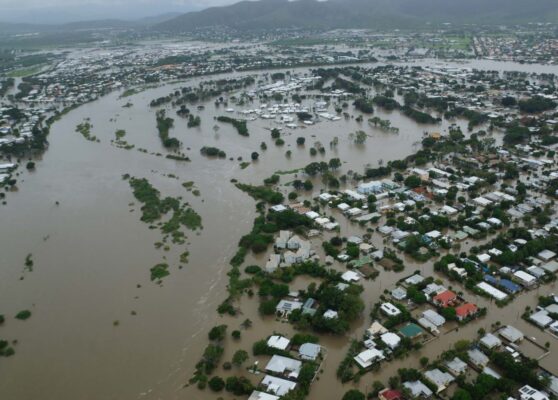
The federal government has released its 2026 annual flood outlook, warning that more than 14,000 communities across 33 states and the Federal Capital Territory face high flood risks this rainy season.
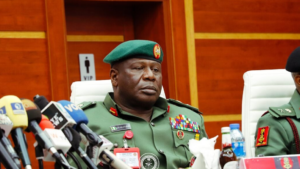
The Minister of Water Resources and Sanitation, Joseph Utsev, disclosed this on Wednesday during the public presentation of the 2026 Annual Flood Outlook by the Nigeria Hydrological Services Agency at the State Banquet Hall of the Aso Villa, Abuja.
According to the report, 405 Local Government Areas in 35 states of the federation fall within the moderate flood risk area, while incidents of minimal flood are expected in 923 communities in 77 LGAs across 24 states.
The Minister said, “Low Flood Risk: Incidences of minimal flood are expected in 923 communities in 77 LGAs in 24 States. The states are Adamawa, Anambra, Bauchi, Bayelsa, Benue, Borno, Cross River, Delta, Ebonyi, Edo, Jigawa, Kaduna, Kano, Kebbi, Kogi, Nasarawa, Niger, Ogun, Ondo, Osun, Oyo, Sokoto, Taraba, and Zamfara.”
The Minister further disclosed that major cities including Lagos, Abuja, and Port Harcourt expected to experience flash flooding due to heavy rainfall and poor drainage systems.
ADVERTISEMENT
Read Also
Utshev added, “Fourteen thousand, one hundred and eighteen communities in 266 local government areas in 33 States and the FCT fall within the high flood risk areas.
“The states are: Abia, Adamawa, Anambra, Bauchi, Bayelsa, Benue, Borno, Cross River, Delta, Ebonyi, Edo, Enugu, Gombe, Imo, Jigawa, Kaduna, Kano, Kebbi, Kogi, Kwara, Lagos, Nasarawa, Niger, Ogun, Ondo, Osun, Oyo, Plateau, Rivers, Sokoto, Taraba, Yobe, Zamfara, and the FCT,” Utshev, a professor, said.
The minister also highlighted that coastal states such as Bayelsa, Delta, and Lagos may see rising sea levels and tidal surges, threatening fishing and infrastructure.
In his speech, the minister of water resources and sanitation, Joseph Utsev, says the government is investing in modern hydrological systems and urging communities to act on early warnings.
Authorities insist that with early planning and coordinated action, Nigeria can reduce the impact of flooding and protect vulnerable communities nationwide.
ADVERTISEMENT