
FIFA has strongly defended the integrity of its match officials at the ongoing 2026 FIFA World Cup, insisting that refereeing decisions cannot be influenced by anyone, including FIFA President Gianni Infantino.
Speaking after the conclusion of the Round of 16, FIFA’s Head of Refereeing, Pierluigi Collina said the governing body remained satisfied with the overall standard of officiating despite recent controversies surrounding several decisions.
“We are happy,” he said while reviewing the tournament so far.
“Let’s start by saying that we have now played 50 per cent more matches than at the FIFA World Cup Qatar 2022, and there are still eight more huge games to be played.”
He acknowledged that with 96 matches already played in a relatively short period, occasional mistakes were inevitable.
ADVERTISEMENT
“With such a high number of matches played in a relatively short period of time, it is normal that some things do not go as expected. When that happens, they are ready to work even harder to ensure they are fully prepared for the next match,” he added.
The official condemned attacks on referees, stressing that criticism should not cross the line into questioning their integrity.
“Constructive discussion about decisions will always be part of football, but unfounded allegations have no place in our sport. Nobody can question the integrity of the FIFA World Cup match officials.”
“When this happens, it may provoke reactions that lead to threats against them and their families. This is not right.”
The statement comes amid widespread debate over several officiating decisions during the tournament, including the controversial suspension of United States forward Folarin Balogun’s automatic red-card ban and complaints lodged by national football associations over refereeing decisions.
ADVERTISEMENT
Read Also: NFF To Organise FIFA Capacity-Building Programme For Women Administrators
Read Also
FIFA also dismissed suggestions that its refereeing department could be influenced externally.
“Nobody can claim that FIFA Refereeing can be influenced by anyone, not even by the FIFA President,” the official said.
“He has always shown his full support for FIFA Team One while trusting us to work with complete independence. Match officials make honest decisions and, just like players and coaches, they always try to do their best.”
FIFA also used the opportunity to clarify the role of the Video Assistant Referee (VAR) in reviewing goals.
ADVERTISEMENT
According to the governing body, every goal is automatically checked by the VAR, with officials reviewing the entire attacking possession phase for any foul that may have directly contributed to the goal.
“There is no defined limit regarding either the distance from goal or the amount of time between the incident and the goal,” FIFA explained.
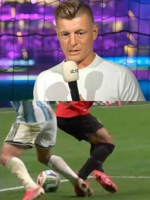
Using Argentina’s Round of 16 victory over Egypt as an example, FIFA said VAR correctly recommended the review that led to the cancellation of Mostafa Ziko’s goal after identifying a foul by Marwan Attia on Lisandro Martínez during the attacking build-up.
The refereeing department also defended the decision not to penalise a later challenge involving Mohamed Salah and Julián Álvarez, saying officials considered it “normal football contact” after determining the defender had played the ball first.
“We believe that a foul is a foul. Regardless of whether the foul appears obvious, if the referee did not see it on the field of play, the VAR can intervene,” FIFA stated.
ADVERTISEMENT
“Of course, there will always be an element of subjectivity in some decisions, but we are happy with how this principle has been applied throughout the tournament.”