In a decisive move to reclaim Nigeria’s internal security, President Bola Ahmed Tinubu has unveiled a new counterterrorism architecture aimed at crushing the heightened insurgency and banditry that have long threatened the country, particularly the Northern region.
President Tinubu declared that any individuals or groups conducting violence for political, ethnic, financial, or sectarian objectives will have such acts classified as terrorism.
President Tinubu stated this while presenting the 2026 budget at the joint session of the National Assembly on Friday.
President Tinubu explained that the new doctrine will fundamentally change the way Nigeria confronts terrorism and other violent crimes that have become existential threats to the corporate survival, and heightened anxiety nationwide.
Under the new 2026 security framework, backed by a ₦5.41 trillion defence budget, President Tinubu stated that the government is shifting away from vague labels such as “bandits” or “militias”, declaring that the “common denominator” for terrorism is the unauthorised possession of lethal weapons and the intent to subvert state authority.
President Tinubu stressed that his administration is resetting the national security architecture to be “holistic,” by classifying all armed non-state actors and their support networks as terrorists, and the government is providing the military with a unified legal mandate to use maximum force.
TVC News in this article highlights actions and roles that will possible lead to a terrorism conviction under the new security framework.
Possession of a Lethal Weapon
The most significant change is the removal of distinctions between different types of armed groups.
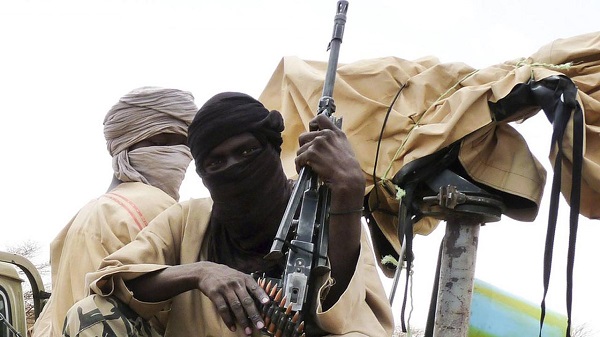
The Action: If you are found wielding a gun, explosive, or any lethal weapon without a state-issued license, you are no longer a “suspect” or a “thug”; you are classified as a terrorist.
Who it affects: Bandits, violent cultists, armed robbers, and “forest-based collectives.”
Acting as an “Enabler” or Informant
The new doctrine recognises that gunmen cannot operate without a support system. The administration is now targeting the “invisible” network.
The Action: Providing information on troop movements, serving as a lookout, or harbouring suspects in a private residence.
The Consequence: Under the widened scope, informants and harborers will face the same terrorism charges as those pulling the trigger.
Financial and Logistics Facilitation
President Tinubu has emphasised “clear accountability for outcomes.” This extends to the money trail.
Read Also
The Action: Handling money for armed groups, facilitating ransom payments (even as a middleman), or supplying food, fuel, and medicine to “non-state actors.”
The Target: Ransom negotiators, money handlers, and logistics suppliers (transporters).
Territorial Occupation and Community Extortion
Under the new architecture, any attempt to mimic state authority over a community is an act of terrorism.
The Action: Setting up “illegal checkpoints,” imposing “taxes” on farmers or communities, or occupying forests and villages.
The Distinction: Whether the motive is ethnic, religious, or purely financial, the state now views these actions as an “existential threat” to the nation’s corporate survival.
Political and “Safe-House” Protection
In a bold warning to the elite, the new policy specifically mentions those who use their influence to shield criminals.
The Action: Using political office or social standing to protect “gun-wielding non-state actors” from arrest or prosecution.
The Consequence: Being a “Political Protector” or “Intermediary” now carries a terrorism classification.
Mobilising Around High-Profile Trials
The new doctrine specifically addresses the “weaponisation” of protests and the formation of groups to pressure the judiciary. Under the 2026 framework, your actions during the trial or after the conviction of a high-profile individual can lead to terrorism charges.
The Action: Organising or joining a separatist group or “defence network” to fight against state authority in response to a court case.
The Distinction: While peaceful protest is a right, the President has clarified that any group using “violence for political, ethnic, or sectarian objectives” is classified as a terrorist organisation.
The Risk: If a group uses threats of violence to demand the release of a suspect or to protest a conviction, every organiser and member of that group becomes a terrorism suspect.
Using armed “sit-at-home” orders or violent protests to demand the release of a suspect is now classified as Militant Separatism. Every organiser and member involved in such a group will be prosecuted for terrorism.