The World Health Organization (WHO) has warned that the ongoing outbreak of Bundibugyo virus disease (BVD), a rare and severe form of Ebola, is evolving rapidly across the Democratic Republic of the Congo (DRC) and Uganda, with rising case numbers, expanding geographic spread and mounting pressure on response systems.
According to the WHO, the outbreak has now recorded a cumulative 695 confirmed cases and 138 deaths across both countries, including 676 cases and 136 deaths in the DRC and 19 confirmed cases with two deaths in Uganda. At least 37 patients have recovered so far.
The UN health agency noted that the increase in cases is partly driven by expanded testing capacity in the DRC, which has enabled the processing of previously untested samples. However, it warned that transmission remains widespread, with cases reported across 29 health zones in Ituri, North Kivu and South Kivu provinces.
“The outbreak continues to evolve rapidly, with increasing case numbers and geographic spread,” the WHO said in its advisory update, stressing that Ituri Province remains the epicentre, accounting for about 93 per cent of confirmed infections.
ADVERTISEMENT
Health officials said the outbreak is now concentrated in multiple hotspots, including Bunia, Rwampara, Mongbwalu and Nyankunde health zones, while also expanding into new areas, raising concerns about undetected transmission.
READ ALSO: No New Ebola Cases Recorded in Uganda – Yoweri Museveni
The WHO also highlighted that 16 health and care workers have been infected, underscoring the continued risk to frontline responders. Contact tracing efforts have reached about 71 per cent coverage, but the organisation warned that this remains insufficient to fully contain the outbreak.
“The outbreak is unfolding in a complex humanitarian and conflict-affected environment, characterized by highly mobile and often displaced populations,” the WHO noted, adding that insecurity and access constraints are disrupting surveillance and response activities.
In Uganda, the WHO said the situation remains stable with no new cases reported in the last six days. The country has recorded 19 confirmed cases, most of which are linked to importation from the DRC, alongside limited secondary transmission among contacts and healthcare workers.
Ugandan cases have been reported in Kampala and Wakiso districts, with no evidence of sustained community transmission so far. Of 820 identified contacts, 409 are under active monitoring while 394 have completed follow-up.
Read Also
ADVERTISEMENT
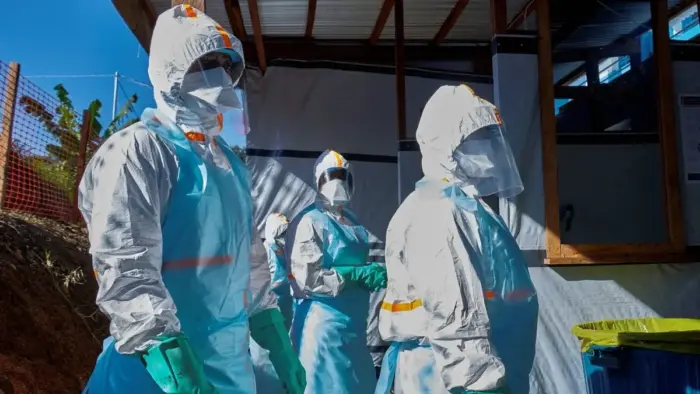
The WHO explained that Bundibugyo virus disease is transmitted through direct contact with infected bodily fluids or contaminated surfaces, with fruit bats believed to be the natural reservoir. It added that the disease has an incubation period of two to 21 days and often begins with non-specific symptoms such as fever, fatigue and headache, making early detection difficult.
“No approved vaccines or specific treatments currently exist for BVD,” the agency said, stressing that control depends on rapid case identification, isolation, contact tracing, safe burials and strong community engagement.
The organisation also warned that current isolation capacity in affected areas remains inadequate, with just 250 beds available across the DRC provinces despite growing case numbers and geographic expansion.
WHO further noted that the outbreak is occurring in a high-risk humanitarian setting marked by population displacement and insecurity, which has complicated response efforts and increased the risk of undetected transmission.
In response, health authorities in both countries, with support from WHO and partners, have intensified surveillance, cross-border coordination and emergency response operations, while also mobilising additional resources to close funding gaps.
ADVERTISEMENT
The UN agency also confirmed that clinical trials are being prepared for candidate therapeutics, including MBP134 and REGN3479, as well as obeldesivir for post-exposure use, under strict ethical oversight and national regulatory review.
WHO maintained its risk assessment, classifying the situation in the DRC as very high, Uganda as high, and neighbouring countries with shared borders also at high risk due to population movement and cross-border trade. The wider African region and global risk remain low.
Despite the growing threat, WHO reiterated that there should be no restriction on travel or trade with either country, urging continued international cooperation, preparedness and adherence to public health recommendations.
“WHO advises against any restriction of travel to, or trade with, the Democratic Republic of the Congo or Uganda based on the currently available information,” the agency stated, adding that coordinated response efforts remain critical to preventing further regional spread.