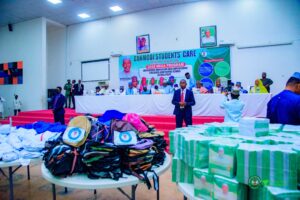
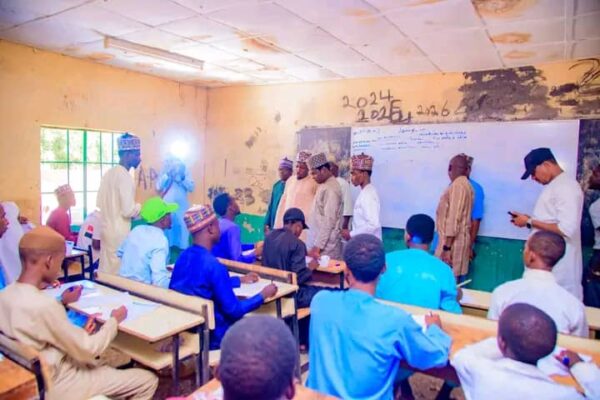
The Danmodi Students’ Care Programme of the Jigawa State Government says more than 30,000 candidates have participated in the 2026 Free Joint Admission and Matriculation Board (JAMB) screening examination, a major step toward accessing the state’s free UTME registration initiative.
Speaking on the exercise, the Senior Special Assistant to the Governor on Students’ Affairs, Muhammad Salisu Seeker, said only candidates who meet the required performance benchmark will qualify for the free JAMB PIN.
He assured students that the selection process will be strictly merit-based, transparent, and free from any form of political interference.
The SSA added that the initiative is designed to expand access to tertiary education, with special focus on students from underprivileged backgrounds.
The exercise held simultaneously in 57 centres across the state and was supervised by 137 officials, ensuring transparency, orderliness, and strict adherence to examination rules.
Officials say the entire process was conducted strictly on merit and due process.
More than 30,000 students participated, with reports from centres indicating a high level of discipline and compliance.
Read Also
This, observers say, reflects the commitment of the Jigawa State Government, under Governor Umar Namadi, to address out-of-school challenges and strengthen human capital development through education.
Danmodi Students’ Care is a student-focused intervention coordinated by the Office of the Senior Special Assistant on Students’ Affairs.
The programme supports students through JAMB registration, screening, admissions, and other academic needs.
It specifically targets underprivileged, rural, and out-of-school youths, helping them re-enter the formal education system and pursue higher education.
In December, the programme also provided free private WAEC registration for about 11,000 students with O-Level deficiencies, further strengthening access to academic progression.
With over 30,000 candidates screened this year alone, Danmodi Students’ Care continues to align with Jigawa State’s 12-Point Development Agenda, reducing educational inequality, empowering young Nigerians, and investing in education as a foundation for sustainable growth.