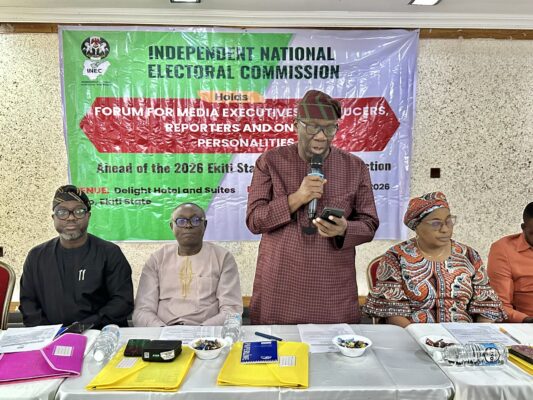
The Independent National Electoral Commission (INEC) has urged journalists and media organisations to verify election-related information before publication or broadcast ahead of the June 20, 2026 governorship election in Ekiti State.
The commission made the appeal during a forum organised for media executives, producers, reporters and on-air personalities in Ado-Ekiti as part of preparations for the off-cycle governorship poll.
According to details shared on INEC’s X handle, the Resident Electoral Commissioner for Ekiti State, Bunmi Omoseyindemi, described the media as a critical partner in protecting democracy and ensuring credible elections.
He said the commission had intensified preparations for the election through voter education, deployment planning, training of personnel and engagement with political parties, security agencies, civil society groups and transport unions.
ADVERTISEMENT
READ ALSO: INEC, Security Agencies Intensify Crackdown on Vote Buying Ahead of Ekiti Guber Poll
Omoseyindemi, however, expressed concern over the growing spread of fake news, manipulated videos and misleading election reports, warning that such content could undermine public trust and threaten peaceful conduct of the poll.
He urged journalists to verify information directly with INEC before publication and avoid sensational reports capable of creating tension.
The REC also encouraged media practitioners to promote issue-based campaigns and amplify official voter education messages.
Speaking at the forum, National Commissioner and Chairman of the Information and Voter Education Committee, Mohammed Kudu, described the Ekiti governorship election as an important test ahead of the 2027 general elections.
Kudu disclosed that the election would be conducted across the state’s 16 local government areas, 177 wards and 2,445 polling units, with 13 political parties participating.
Read Also
ADVERTISEMENT
He identified voter apathy, vote buying, political violence and misinformation as some of the major challenges confronting the electoral process.
The national commissioner also urged media organisations to intensify voter education in English, Yoruba and local dialects, particularly on the use of the Bimodal Voter Accreditation System and the INEC Result Viewing Portal.
In his remarks, Chief Press Secretary to the INEC Chairman, Adedayo Oketola, revealed that 54 media organisations and 470 journalists had already completed accreditation to cover the election.
He warned that fake news, deep fakes and disinformation now pose major threats to credible elections and advised journalists, especially field reporters and on-air personalities, to avoid broadcasting unverified reports.
Oketola assured journalists that the commission’s communication channels remained open for clarification and updates throughout the election period.
ADVERTISEMENT
Also speaking, Chairman of the Nigeria Union of Journalists, Ekiti State Council, Kayode Babatuyi, commended INEC for engaging the media ahead of the poll.
He said the union had introduced measures to regulate online journalism and address the spread of fake news through improved accountability and ethical compliance among practitioners.
The forum also featured technical sessions on election-day procedures, BVAS operations and media accreditation processes facilitated by INEC officials.