
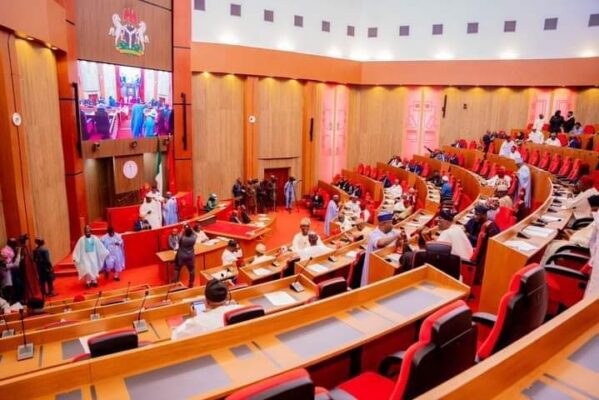
The Senate has thrown its weight behind the introduction of a fully electronic and integrated civil registration system, describing it as a critical step toward improving national planning, governance and data-driven decision-making in Nigeria.
The position was articulated on Monday in Abuja by the Chairman of the Senate Committee on National Identity Card and National Population, Senator Victor Umeh, during a public hearing organised by the committee.
The hearing focused on a proposed legislation seeking to repeal the Births, Deaths, etc. (Compulsory Registration) Act, Cap B9, Laws of the Federation of Nigeria 2004, and replace it with the Compulsory Civil Registration Act, 2025.
The bill, sponsored by Umeh, aims to establish an electronic civil registration framework in line with global best practices.
Speaking at the event, Umeh said Nigeria could no longer afford to operate a fragmented and paper-based civil registration system in an era of digital governance.
He stressed that accurate and comprehensive records of births and deaths are essential for credible population data, effective national development planning and transparent governance.
According to him, the public hearing was convened to gather technical input, expert opinions and stakeholder contributions that would help shape a modern and implementable law. He noted that the existing legal framework, which has been in place for decades, no longer meets the country’s developmental and administrative needs.
Umeh explained that reliance on estimates and disjointed identity databases has continued to undermine planning in critical sectors such as education, healthcare and national security.
He said the proposed law would ensure compulsory registration of all births and deaths across the country, irrespective of location, social status, gender or religious affiliation.
READ ALSO: Senate clears Omokri, FFK, others for ambassadorial positions
The bill, he added, also seeks to enable real-time digital registration nationwide, including in hard-to-reach and rural areas, through electronic and mobile platforms.
Read Also
It further aims to strengthen Nigeria’s identity management ecosystem by promoting collaboration among key agencies, including the National Identity Management Commission, National Population Commission, Nigeria Immigration Service, Federal Road Safety Corps and relevant health institutions.
In a keynote address, Senate President Godswill Akpabio underscored the importance of civil registration to statehood, describing accurate population records as fundamental to national sovereignty.
Akpabio, who was represented by the Deputy Chief Whip of the Senate, Senator Peter Nwebonyi, said reliable vital statistics enable government to plan better, allocate resources more efficiently and provide legal identity for all citizens.
He assured that the National Assembly would continue to support legislation that promotes data-driven governance, national security and social development, noting that an effective system for registering births, deaths, marriages and divorces is essential to a credible national identity framework.
Also speaking, the Chairman of the National Population Commission, Aminu Yusuf, said the proposed legislation was timely and aligned with ongoing efforts to modernise civil registration in the country.
Represented by the Federal Commissioner for Adamawa State, Clifford Zirra, Yusuf said the commission had been integrating technology, developing interoperable platforms and addressing gaps identified in the implementation of existing laws over the past 30 years.
He disclosed that the NPC worked with private consultants, with support from UNICEF, during the review of the bill. Yusuf commended the Senate committee and stakeholders, and called for a comprehensive review of both the National Population Act and the Births and Deaths (Compulsory Registration) Act to avoid overlaps, clarify mandates and improve enforcement.
Meanwhile, the Christian Association of Nigeria (CAN) welcomed the proposed repeal of the 2004 Act, describing it as a progressive move that reflects current technological realities.
The CAN President, Archbishop Daniel Okoh, represented by Mrs Comfort, however, urged the committee to revise Section 9 of the bill by replacing the phrase “religious minister” with “clergy.”
According to CAN, the suggested amendment would provide clearer legal definitions and prevent ambiguity, noting that the term “clergy” more precisely identifies recognised religious leaders such as pastors, priests and imams.