
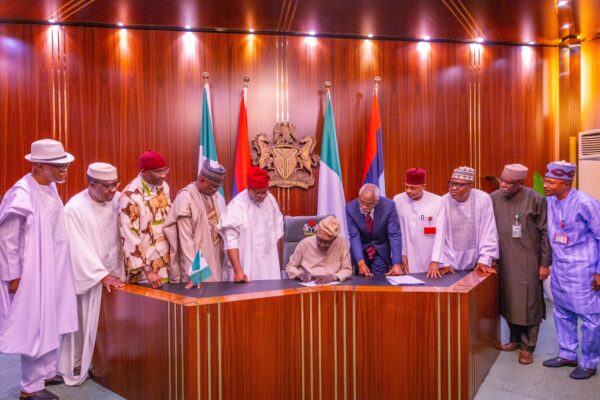
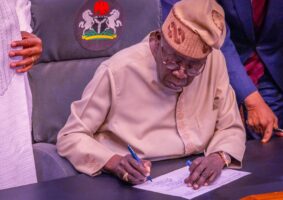
PresidentBola Ahmed Tinubu has signed the reworked Electoral Act 2022 (Repeal and Re-enactment) Bill 2026 into law, bringing the new Electoral Act 2026 into immediate effect and setting the stage for preparations toward the 2027 general elections.
The brief signing ceremony was witnessed by Senate President Godswill Akpabio, Speaker of the House of Representatives Abbas Tajudeen, Deputy Speaker Benjamin Kalu, Senate Leader Opeyemi Bamidele, and the President’s Chief of Staff, Femi Gbajabiamila, among other senior officials.
Tinubu described the legislation as a major contribution to electoral sanity, stressing that Nigeria’s voting process remains largely manual and must be safeguarded against technological glitches, hacking, and infrastructure limitations.
He emphasised that credible elections depend on clear procedures that prevent confusion and disenfranchisement, noting that final results are ultimately announced by human officials rather than machines.
The new law replaces the Electoral Act 2022 previously invoked by the Independent National Electoral Commission to release the timetable for the next general elections.
With the notification window now reduced from 360 days to 300 days, the commission has greater flexibility to adjust the schedule potentially allowing national elections to be held in January 2027 and avoiding the Ramadan period.
Key provisions of the Act include legal recognition of the Bimodal Voter Accreditation System (BVAS) and the INEC Result Viewing Portal (IReV), statutory backing for electronic transmission of results alongside manually recorded Form EC8A where networks fail, strengthened sanctions for collation infractions, reinforced safeguards against overvoting, and digital verification of party membership registers.
The law also abolishes indirect primaries, limiting party candidate selection to consensus or direct primaries.
Akpabio said the amendments reflect Nigeria’s peculiar realities and respond to public demand for electronic visibility of polling-unit results while preserving manual safeguards in areas without connectivity.
Tajudeen added that shortening the notice period could help prevent voter apathy by ensuring elections do not clash with religious observances.
Meanwhile, Minister of the Federal Capital Territory, Nyesom Wike, praised Tinubu’s swift assent, describing it as further evidence of the administration’s commitment to credible elections and democratic consolidation.
Political leaders across party lines have welcomed the development, saying the reforms strengthen confidence in Nigeria’s electoral system and clear the path toward the 2027 general elections.