The National Agency for Food and Drug Administration and Control (NAFDAC) has busted a notorious fake-drug syndicate inside the Trade Fair Complex, uncovering a massive illegal factory and distribution hub for fake and banned medicines.
Addressing a press conference in Lagos, Martins Iluyomade, Director of Investigation and Enforcement, NAFDAC, revealed that intelligence reports received on February 3rd led operatives to a seemingly ordinary warehouse inside the Trade Fair Complex, a location that turned out to be a massive illegal factory and distribution hub for fake and banned medicines.
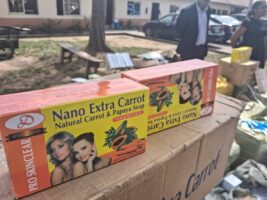
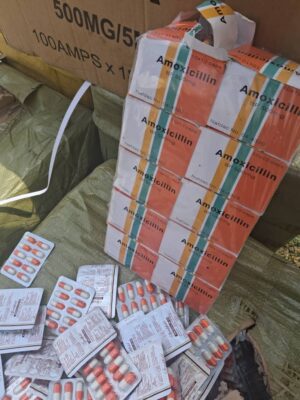
According to Iluyomade, NAFDAC officials discovered millions of falsified and prohibited doses of drugs, including Fake anti-malaria medications, counterfeit injections, so-called “life-saving” emergency drugs and products that have been banned in Nigeria for more than 15 years inside the facility.
The NAFDAC director disclosed that some of the drugs were cloned to look exactly like genuine medicines, making them nearly impossible for ordinary Nigerians to detect.
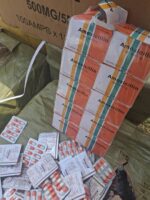
NAFDAC further stated that the fake anti-malaria drugs had the potential to kill more than three million Nigerians by allowing malaria to go untreated while victims believed they were receiving real medication.
In total, over 10 million doses of dangerous fake medicines and cosmetics were recovered from the warehouse.
The seized products are valued at ₦3 billion, and eight trailers were required to evacuate the deadly cargo from the site.
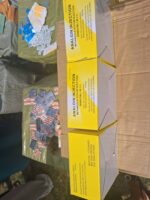
NAFDAC described the operation as one of the biggest fake-drug busts in Nigeria’s history, confirming that the warehouse was part of a well-organised cartel with national distribution networks.
Four suspects were arrested at the scene, while a full manhunt is now underway for the cartel’s mastermind, who is believed to be coordinating a multi-billion-naira criminal enterprise.
The agency has vowed to dismantle the entire fake-drug network, warning that anyone involved in the production, storage, or distribution of these deadly substances will face the full weight of the law.
This operation, NAFDAC says, has saved millions of lives and exposed how close Nigeria came to one of its deadliest pharmaceutical disasters