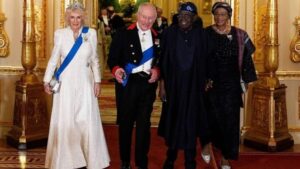
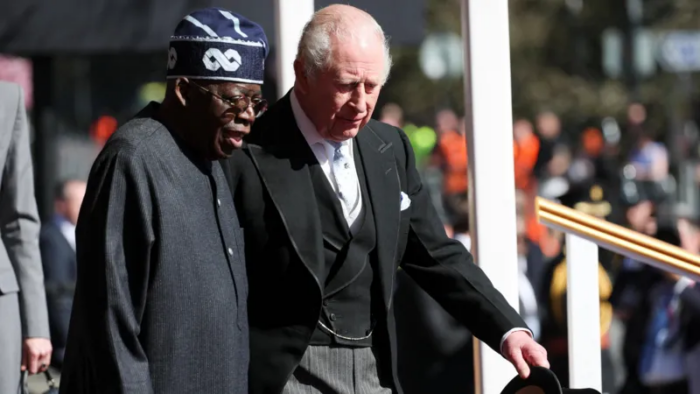
King Charles III on Wednesday called on Nigeria to assume its “rightful place at the heart of the Commonwealth of Nations,” urging closer economic collaboration with the United Kingdom to unlock barrier-free trade and mutual growth.
The remarks were delivered during a state banquet at Windsor Castle in honour of President Bola Ahmed Tinubu and First Lady Oluremi Tinubu.
Describing Nigeria as “an economic powerhouse, a cultural force and an influential diplomatic voice,” the monarch highlighted the country’s pivotal role within the Commonwealth and its potential to shape global commerce.
He stressed that removing trade barriers, harmonising regulations, and aligning standards would create vast opportunities for both nations.
“As we look towards the Commonwealth Heads of Government Meeting this year, I hope… we can demonstrate that the Commonwealth’s time has come. In achieving that, my wife and I will gain strength from seeing Nigeria take her rightful place at the heart of the Commonwealth and standing alongside you as a friend who believes the future is best when built together,” King Charles said.
The monarch highlighted Nigeria’s large, youthful population of over 230 million, half under 18, as a key driver of innovation, enterprise, and solutions to global challenges.
READ ALSO: UK State Visit: NSIA Signs Major Dairy Infrastructure Deal
He also noted the growing economic integration between the UK and Nigeria, pointing to investments by Nigerian businesses in London, partnerships between British and Nigerian tech firms, and UK Export Finance support for Nigerian ports.
Read Also
In 2024, Nigerian visitors spent £178 million in the UK, while about 251,000 Britons travelled to Nigeria, generating comparable revenue. King Charles added: “In January this year, Nigeria became the United Kingdom’s biggest export market in Africa,” illustrating a two-way commercial exchange that continues to deepen.
Beyond trade, the monarch paid tribute to the Nigerian diaspora in the UK, describing over half a million Nigerians as a “living bridge” whose contributions have enriched British society across sectors including business, healthcare, academia, sports, and the creative industries. He also acknowledged the global impact of Nigerian culture, from Afrobeats dominating charts to Nollywood films achieving international recognition.
Reflecting on his past visits to Nigeria, including engagements with traditional rulers such as the Sultan of Sokoto, the Ooni of Ife, and the Emir of Kano, King Charles declared: “Nigeria hasn’t merely changed. It has arrived.”
He acknowledged the shared history between the UK and Nigeria, noting that while some chapters carry painful marks, lessons from the past can guide a future of shared prosperity. “I do not seek to offer words that dissolve the past… but I do believe that history is a lesson in how we go forward together,” he said.
The King also highlighted collaborative efforts in security and humanitarian support, including aid to Nigeria’s Quick Reaction Forces and interventions in northern Nigeria to address food security and community protection challenges.
Earlier in the day, he and President Tinubu met with British Christian and Muslim leaders, which he described as “a deeply meaningful symbol of what Nigeria has long shown: that people of different faiths can, do, and must live alongside one another, in peace, in harmony and in shared purpose.”
Invoking African proverbs, King Charles urged unity and adaptability in a rapidly changing world, noting that both nations must “learn new dance steps together” to remain competitive. Concluding his speech, he extended greetings to Muslims observing Ramadan and offered early wishes for Eid-el-Fitr.
Ending on a light-hearted yet admiring note, the King raised a toast to Nigeria and its people, saying: “Naija no dey carry last.”