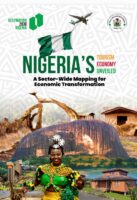
The Federal Ministry of Art, Culture, Tourism and Creative Economy has unveiled a landmark report aimed at repositioning tourism as a major driver of Nigeria’s economic development.
The report, titled Nigeria’s Tourism Economy Unveiled: A Sector-Wide Mapping for Economic Transformation, is the most comprehensive assessment of the country’s tourism sector to date and is designed to support policy reforms, attract investment, create jobs and enhance Nigeria’s global competitiveness.
Commissioned under the leadership of the Minister of Art, Culture, Tourism and Creative Economy, Barrister Hannatu Musa Musawa, the study draws on extensive research conducted across Nigeria’s six geopolitical zones.
It provides a detailed analysis of the structure, performance and growth potential of the tourism value chain nationwide.
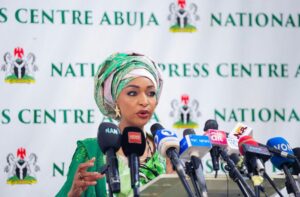
Speaking on the report, Musawa described it as a defining moment for the sector, saying tourism has now been firmly placed at the centre of Nigeria’s economic planning.
She said the sector has the potential to drive inclusive growth, empower communities and strengthen Nigeria’s global image, in line with President Bola Ahmed Tinubu’s Renewed Hope Agenda.
The findings identify tourism as one of Nigeria’s most resilient and people-centred sectors, driven largely by domestic travel and community-based enterprises.
The report assesses key segments including accommodation, food and beverage services, transport, entertainment and leisure, and business tourism, highlighting areas of existing value, employment and future expansion.

It also underscores tourism’s strong capacity for job creation, particularly for young people and women, while supporting small and medium-sized enterprises in both urban and rural areas.
While outlining economic opportunities, the report also addresses longstanding challenges such as infrastructure deficits, skills gaps, regulatory fragmentation and limited access to finance for small operators.
It proposes a coordinated national framework that integrates tourism development with broader economic planning, infrastructure delivery, skills development and cultural diplomacy.
Designed as a practical policy tool, the report sets out a phased, data-driven roadmap for implementation, prioritising improved coordination between federal and state institutions, stronger data systems, workforce development and targeted investment strategies.
The ministry said insights from the report would guide ongoing stakeholder consultations, policy reforms and programme implementation under the Renewed Hope Agenda.
Musawa stressed that the success of the initiative would be measured by effective implementation, noting that the report provides a shared reference point for government, investors and communities to align ambition with clear, evidence-based strategy.