
Effective January 1, 2026, air ticket taxes across West Africa will be abolished, and airfares are expected to drop by over 20 per cent as part of a regional policy aimed at making air travel more affordable and stimulating economic activities.
However, the Nigerian Air Traffic Controllers’ Association (NATCA) has formally petitioned the National Executive Council (NEC) of the Air Transport Services Senior Staff Association of Nigeria (ATSSSAN), accusing the Federal Airports Authority of Nigeria (FAAN) of persistent breaches of the union’s constitutional financial regulations.
Meanwhile, the International Air Transport Association (IATA) reported that 93 per cent of the $1.2 billion in airline revenues blocked globally are concentrated in Africa and the Middle East.
To enhance air safety, modernise infrastructure, and improve passenger experience, the Federal Government has approved a comprehensive upgrade of navigational and communication systems across airports nationwide.
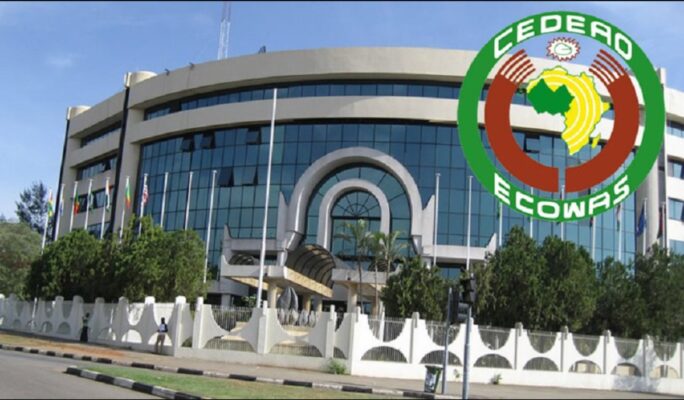
Chris Appiah, Director of Transport and Telecommunications at the Economic Community of West African States (ECOWAS), said yesterday in Abuja that the decision followed a decade of studies which confirmed that West Africa had the most expensive air transport services in Africa.
He explained that high regional flight costs are largely driven by government taxes and aviation charges. “If you buy a typical ticket in West Africa from any of the airlines, you realise that about 64 to 70 per cent of the ticket price is as a result of taxes and charges,” he said.
Appiah added that Heads of States recognised the problem during their 2023 summit in Abuja and directed transport and finance ministers to find a permanent solution.
“This led to the adoption of a supplementary act in December 2024, compelling member states to eliminate all air transport taxes and reduce aviation charges by 25 per cent starting January 2026,” he stated.
READ ALSO: UPDATED: ECOWAS Announces State of Emergency in West Africa
He continued: “From January 1, 2026, Heads of States have agreed that all member states should remove taxes on air transport. These taxes are against the International Civil Aviation Organisation’s guidelines and suppress demand rather than support growth.”
Appiah emphasised that the policy is a core part of ECOWAS’ integration agenda, which relies on connectivity and the free movement of people, goods, and services.
Meanwhile, NATCA said the alleged violations rendered FAAN ineligible to participate in the upcoming union elections or hold office. ATSSSAN is set to hold elections for new executives this weekend in Jos, Plateau State.
A petition dated December 9, 2025, with reference number REF:NATCA/2025/ATSSSAN/06, signed by NATCA President Edino Amos and ex-officio Abayomi Agoro, claimed that FAAN repeatedly failed to remit mandatory monthly union dues, breaching key provisions of the ATSSSAN constitution.
The petition, copied to all ATSSSAN branches and the Director of Trade Union Services, Federal Ministry of Labour and Employment, cited Rule 4 (iii) prohibiting branches from withholding dues and Rule 4 (iv) mandating automatic suspension for branches failing to remit dues for three consecutive months.
Petitioners argued that FAAN’s prolonged non-remittance violated Rules 6 (vii), 6 (viii) and 6 (x), which require members and branches to be in “good financial standing” before voting, nominating delegates, contesting office, or serving as delegates.
Read Also
NATCA urged the NEC to immediately enforce the union’s constitutional provisions and apply sanctions against FAAN for “prolonged and unjustifiable non-compliance.”
The association also demanded the immediate suspension of FAAN members from all ATSSSAN activities per Rule 4 (iv) until dues for the outstanding 15 months were verified.
Furthermore, NATCA insisted that FAAN must provide verifiable proof of all remittances as requested by the National Administrative Council (NAC) and called for an investigative audit of FAAN’s membership data, dues history, and potential financial irregularities.
“NATCA warned that allowing any branch to flout the union’s constitution poses a threat to the integrity of ATSSSAN.”
IATA reported that airline funds trapped globally stood at $1.2 billion as of October 2025, showing only a marginal improvement of $100 million since April.
Willie Walsh, Director-General of IATA, called on governments, particularly in Africa, to remove restrictions on currency repatriation, allowing airlines access to revenues from ticket sales, cargo, and related activities as guaranteed under Bilateral Air Service Agreements (BASAs).
He stressed that airlines need reliable access to their revenues in US dollars to maintain operations, pay bills, and sustain air connectivity. “Freeing trapped funds is not only a contractual obligation but also crucial for economic growth,” he added.
IATA noted that 10 countries, mostly in Africa, accounted for $1.08 billion, or 89 per cent, of blocked funds, with Algeria topping the list at $307 million due to new Ministry of Trade approval requirements.
Other affected regions include XAF Zones (Cameroon, Central African Republic, Chad, Republic of Congo, Equatorial Guinea, Gabon) at $179 million; Lebanon $138 million, Mozambique $91 million, Angola $81 million, Eritrea $78 million, Zimbabwe $67 million, Ethiopia $54 million, Pakistan $54 million, and Bangladesh $32 million.
Walsh attributed the crisis to political instability, economic pressure, forex scarcity, and inconsistent documentation procedures, and announced a public webpage providing quarterly updates, background details, and policy developments on blocked funds globally.
Festus Keyamo, Minister of Aviation and Aerospace Development, confirmed approval of the infrastructure overhaul to State House Correspondents after the Federal Executive Council (FEC) meeting presided over by President Bola Tinubu at the Presidential Villa, Abuja.
Keyamo said the Council endorsed the extension of the China Civil Engineering Construction Corporation (CCECC) maintenance contract for the new terminal at Mallam Aminu Kano International Airport (MAKIA), along with several critical aviation projects.
The upgrades include the installation of Advanced Surface Movement Guidance and Control Systems (A-SMGCS) in Lagos and Abuja to detect runway obstructions, procurement of modular air traffic control towers for eight airports, deployment of an aeronautical frequency monitoring and interference detection system, and replacement and upgrade of Very High Frequency (VHF) radio communication systems in nine airports.
Airports earmarked for VHF upgrades include Lagos, Port Harcourt, Ilorin, Abuja, Kano, Maiduguri, Sokoto, and Wukari.
Keyamo also announced presidential approval for the deployment of biometric-enabled electronic gates (e-gates) at all international airports to accelerate passenger processing and enhance travel convenience.