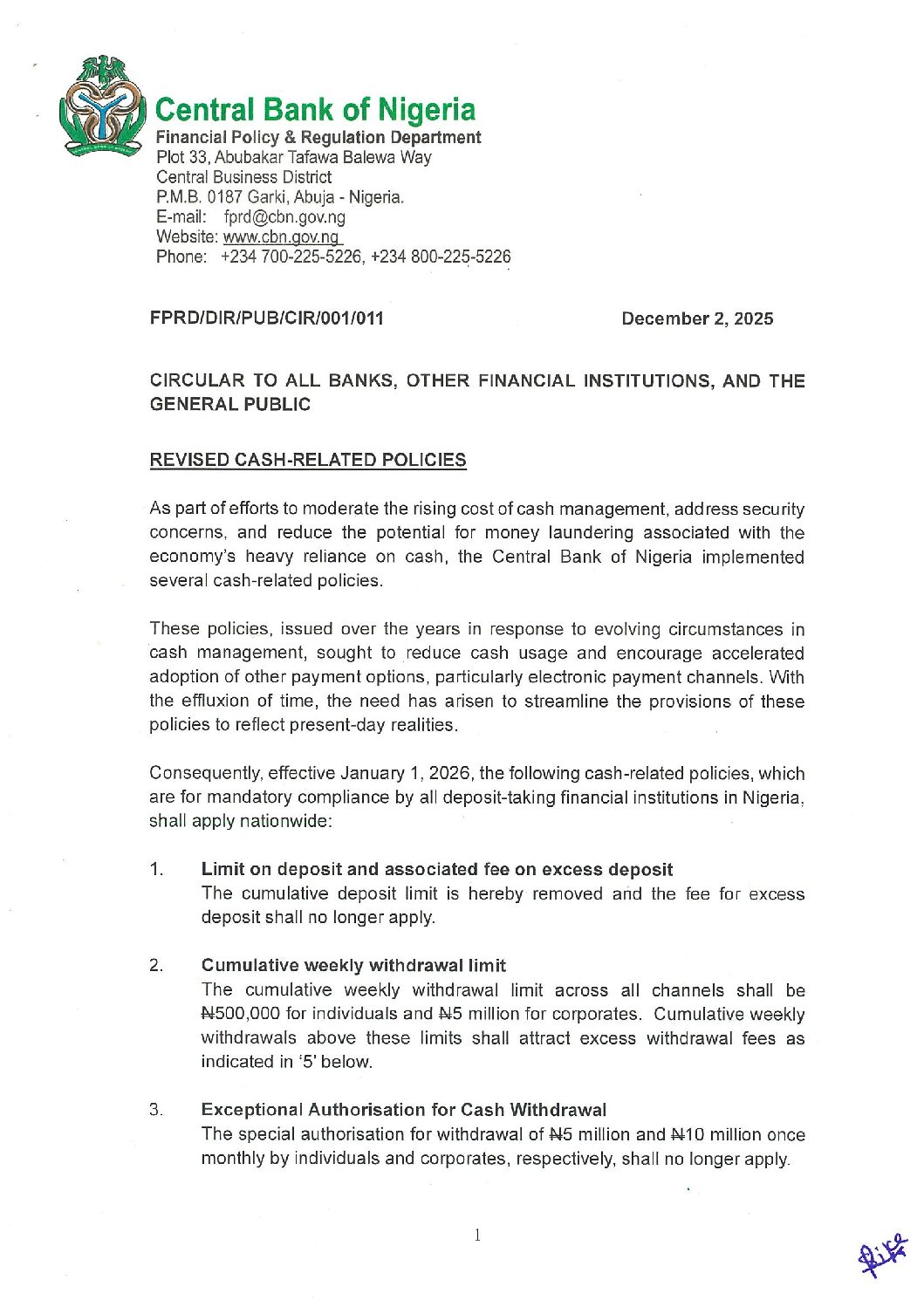
The Central Bank of Nigeria (CBN) has announced revised cash-related policies aimed at reducing the cost of cash management, enhancing security, and curbing potential money laundering risks associated with heavy cash usage in the economy.
Effective 1 January 2026, the new regulations will apply to all deposit-taking financial institutions nationwide. Key provisions include:
-
Weekly Withdrawal Limits: Individuals may withdraw up to ₦500,000 weekly, while corporates are capped at ₦5 million. Excess withdrawals will incur fees of 3% for individuals and 5% for corporates.
-
ATM Limits: Daily ATM withdrawals are set at ₦100,000, with a maximum of ₦500,000 per week.
-
Removal of Special Authorisations: The once-monthly special authorisation for withdrawals of ₦5 million (individuals) and ₦10 million (corporates) will no longer apply.
-
Denominations in ATMs: All currency denominations may now be loaded into ATMs.
-
Third-Party Cheques: Over-the-counter encashment of third-party cheques remains capped at ₦100,000, counted towards weekly limits.
-
Exemptions: Revenue-generating government accounts and microfinance and primary mortgage bank accounts remain exempt from weekly withdrawal limits and excess withdrawal fees. However, exemptions for embassies, diplomatic missions, and aid-donor agencies have been removed.
-
Reporting Requirements: Banks must submit monthly reports on cash withdrawals above the limits and cash deposits. Processing charges from excess withdrawals must be recorded in separate internal accounts.
The CBN said the policy updates streamline previous regulations to reflect present-day realities while encouraging the adoption of electronic payment channels.
The circular was signed by Dr. Rita I. Sike, Director of the Financial Policy & Regulation Department.