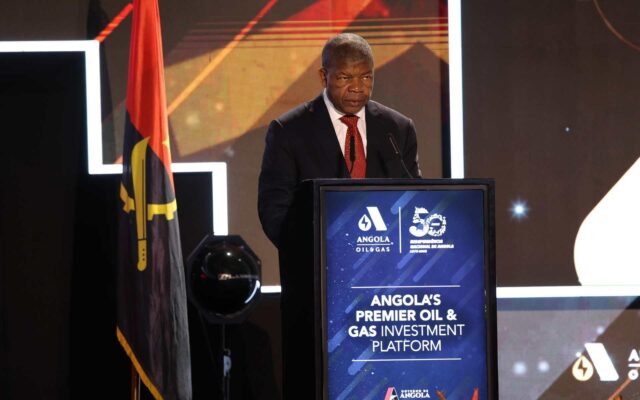
Angolan President João Lourenço has reaffirmed his administration’s commitment to deepening reforms in the country’s oil and gas sector, positioning Angola as a leading example of resource-driven transformation in Africa.
Speaking at the Angola Oil and Gas 2025, Lourenço emphasised that Angola’s energy sector is undergoing a deliberate shift from a history of overdependence on crude oil to a more diversified, transparent and investment-friendly framework.
His remarks align closely with arguments advanced in a new book by African energy executive NJ Ayuk, titled Crude Oil: Power, Turnaround and Transformation in Angola, which presents the country as a model for oil sector reform on the continent.
The book frames Angola’s petroleum industry as more than a story of production and exports, instead portraying it as a political and economic case study in rebuilding credibility after decades marked by civil war, institutional fragility and governance challenges.
Ayuk argues that under Lourenço’s leadership, Angola has entered a reform-driven phase aimed at restoring investor confidence, strengthening institutions and promoting local participation in the oil and gas value chain.
ADVERTISEMENT
Central to this transformation, the book highlights the role of the Minister of Mineral Resources, Petroleum and Gas, Diamantino Azevedo, described as a key technocratic figure driving sectoral reforms.
A major institutional shift cited is the restructuring of Sonangol, Angola’s national oil company, alongside the creation of the National Agency for Oil, Gas and Biofuels. The move is seen as a step towards separating regulatory oversight from commercial operations, addressing long-standing governance concerns.
Ayuk’s work also underscores Angola’s push to expand local content, arguing that the success of reforms should be measured not only by investment inflows but by the extent of participation by Angolan businesses and workforce in the sector.
Natural gas development is identified as a key pillar of the country’s future energy strategy, supported by legislative reforms and projects such as Angola LNG, signalling a transition from oil dependency to a broader energy mix.
The book further situates Angola within the global energy debate, pointing to its 2023 exit from the Organization of the Petroleum Exporting Countries (OPEC) as a statement of production sovereignty and a bid to assert greater control over its resources.
ADVERTISEMENT
While acknowledging challenges such as infrastructure gaps, refining capacity constraints and market volatility, Ayuk maintains an optimistic outlook, presenting Angola as a country seeking to convert its oil wealth into long-term economic development.
For African producers, including Nigeria, the narrative offers broader lessons on the link between resource management, governance reform and national development.
At the conference, Lourenço reiterated that Africa must be allowed to chart its own energy transition path, balancing climate considerations with the need for economic growth and energy access.
The convergence of policy direction outlined by the Angolan government and the themes explored in Ayuk’s book highlights a growing narrative: that Angola is striving to transform its oil sector from a source of vulnerability into a foundation for national renewal and continental influence in the global ener