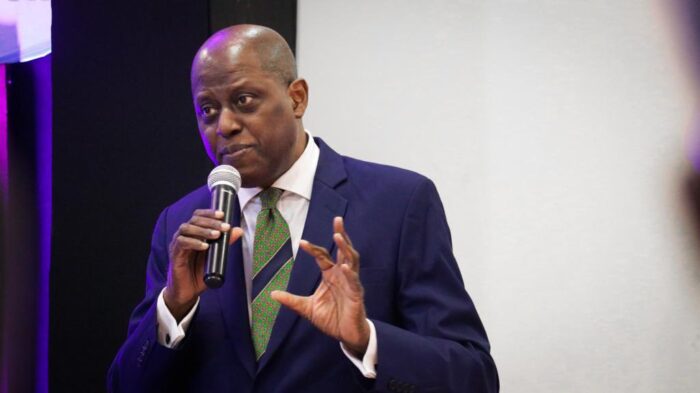
The Governor of the Central Bank of Nigeria (CBN), Olayemi Cardoso, has said Nigeria’s foreign reserves increased significantly over the past two years due to policy reforms and improved foreign exchange management.
According to him, Nigeria’s net foreign reserves rose from $3.99 billion at the end of 2023 to $34.80 billion at the end of 2025, representing an increase of about 772 per cent.
Foreign reserves are funds a country keeps in foreign currencies such as the US dollar to finance imports, meet international financial obligations and stabilise its currency during periods of economic pressure.
Cardoso said the sharp rise in reserves shows that Nigeria now has a stronger financial buffer to support the economy when necessary.
He noted that the net reserves recorded at the end of 2025 were even higher than the country’s total gross reserves at the end of 2023, which stood at $33.22 billion.
The CBN governor had earlier disclosed during a press briefing after the Monetary Policy Committee meeting on February 24, 2026, that Nigeria’s gross external reserves had reached $50.45 billion as of February 16, 2026.
In a statement issued in Abuja, Cardoso said the increase reflects improvements in the country’s economic fundamentals and the impact of reforms introduced by the central bank.
“Nigeria’s gross and net foreign reserves showed significant improvement at the end of 2025, reflecting stronger external sector fundamentals and sustained policy reforms,” he said.
He explained that the growth in reserves was supported by efforts to improve transparency and credibility in the management of the foreign exchange market.
According to him, increased transparency in the system has boosted investor confidence and encouraged more foreign exchange inflows into the country.
“These figures emphasise the benefits of increased transparency and credibility in foreign exchange management, boosting investor confidence, attracting stronger foreign exchange inflows and improving reserve management practices aimed at preserving capital, ensuring liquidity and supporting long-term sustainability,” Cardoso said.
He added that stronger reserves would help Nigeria meet international financial obligations and manage economic shocks more effectively.
Cardoso also outlined how the reserves improved year by year.
According to him, Nigeria’s net foreign reserves rose from $23.11 billion at the end of 2024 to $34.80 billion at the end of 2025.
Within the same period, gross reserves increased from $40.19 billion in 2024 to $45.71 billion at the end of 2025, representing a rise of $5.52 billion in one year.
The CBN governor said the stronger reserve position will also help stabilise the foreign exchange market and support confidence in the economy.
He added that the apex bank will continue to pursue policies aimed at maintaining strong reserves, ensuring stability in the foreign exchange market and supporting sustainable economic growth.