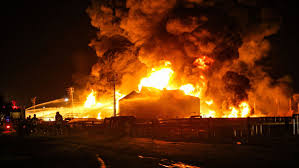
Rystad Energy has warned that repair and restoration costs for energy infrastructure damaged by conflict in the Middle East could rise to as much as $58 billion.
In a market update, the firm said oil and gas facilities alone could account for up to $50 billion of the total, noting that the scale of destruction has “expanded materially” from an earlier estimate of $25 billion issued in March.
According to Rystad, continued military strikes before the April 8 ceasefire between the United States and Iran significantly increased the number of affected assets across the region.
The firm now estimates average repair costs at around $46 billion, within a projected range of $34 billion to $58 billion, including about $5 billion tied to industrial, power and desalination facilities.
Rystad identified Iran and Qatar as the most impacted countries.
ADVERTISEMENT
In Iran, damage spans the entire energy value chain—from gas processing and refining to storage and exports—with repair costs potentially reaching $19 billion.
Key facilities affected include processing plants linked to the South Pars gas field and petrochemical complexes, alongside export infrastructure.
Qatar’s damage is more concentrated but technically complex, centred around Ras Laffan Industrial City, where liquefied natural gas (LNG) facilities and gas-to-liquids operations have been disrupted.
The overlap between repair work and ongoing expansion projects could slow project timelines.
Rystad noted that recovery timelines are increasingly shaped by access to equipment, contractors and logistics rather than funding.
ADVERTISEMENT
The firm warned that repair work could divert resources away from new energy projects globally.
It added that competition for limited engineering capacity and specialised equipment may delay both reconstruction and planned expansions, particularly in LNG and offshore developments already underway.
A senior analyst at the company described the situation as a “stress test for the global energy supply chain,” warning that the ripple effects could extend beyond the Middle East and impact global energy investment timelines.
The report highlighted ongoing risks around shipping through the strategic Strait of Hormuz, a key route for global oil and gas flows, noting that any disruption could further complicate recovery and energy supply stability.
Rystad concluded that the pace of recovery will depend less on the scale of physical damage and more on how quickly operators can secure access to constrained global supply chains.
ADVERTISEMENT