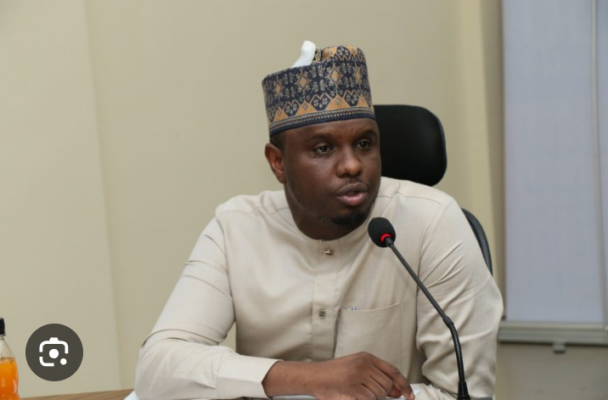
After nearly two years of investigation into alleged financial misconduct at the Rural Electrification Agency (REA), authorities have found no evidence implicating the agency’s former Managing Director, Ahmad Salihijo, and former Executive Director, Technical Services, Barka Sajou, in the irregular payment practices that triggered the probe.
The REA, an agency under the Federal Ministry of Power, came under scrutiny in 2023 following internal and external audits that uncovered irregular payment patterns, suspected misappropriation of funds, and possible abuse of office. The findings prompted anti-graft agencies to launch a wide-ranging investigation into the agency’s procurement and payment systems.
The probe focused on how approvals were processed and how funds were disbursed through government financial platforms, particularly the Government Integrated Financial Management Information System (GIFMIS). Investigators examined documentation relating to rural electrification projects across the country, scrutinising procurement records, payment vouchers, and internal audit processes.
Months before his indefinite suspension, Salihijo had reportedly raised concerns with relevant authorities over unusual disbursement activities. He was said to have flagged irregular payment patterns processed through GIFMIS, prompting internal reviews within the agency.
Following the discovery of the anomalies, the agency’s executive management initiated accountability procedures. Officials within the Finance and Accounts Department were queried and subsequently suspended. The Senior Staff Committee (SSC), in line with public service rules, recommended their dismissal and forwarded its position to the supervisory ministry for ratification around the same period the former Managing Director and executive team were suspended.
Between August and September 2023, law enforcement agencies invited several REA officials for questioning. The expanded inquiry zeroed in on procurement procedures and payment authorisations, with particular attention to whether due process and internal audit clearances were observed before funds were released.
Investigators eventually concluded that the primary responsibility for the unauthorised withdrawals lay with the former Director of Finance, former Director of Human Resources, and some senior accounts personnel. According to findings, these officials allegedly processed payments without the required approvals and bypassed established financial controls, including the authority of the Managing Director and executive management.
Read Also
- Former REA MD Ahmad Salihijo Commends President Tinubu's Rural Electrification Drive
- Probes Exonerate Former REA MD Ahmad Salihijo, ED as Other Officials Face Trial
- REA Probe: Former MD Ahmad Salihijo, Executive Director Not Listed in Ongoing Court Cases
- Former REA MD, Ahmad Salihijo Cleared of Alleged Fraud
Legal proceedings that followed focused exclusively on those implicated in the alleged infractions. In mid-2024, several REA officials were arraigned before the Federal High Court in Abuja on charges bordering on fraud, criminal conspiracy, and diversion of public funds. Court documents indicated multiple charge numbers, with orders issued for arrests, remand, and asset forfeiture proceedings against the indicted individuals.
Investigators maintained that the disputed payments were executed without mandatory internal audit clearance and without the approval of the Managing Director, in breach of financial regulations governing public institutions.
In 2025, anti-graft agencies secured interim forfeiture orders over properties traced to proceeds of the alleged fraud. The orders, granted by the Federal High Court in Abuja, covered assets linked to funds said to have been diverted through compromised payment processes and routed via personal and proxy accounts controlled by the indicted officials.
Notably, throughout the investigation, prosecution, and forfeiture proceedings, neither Salihijo nor Sajou was listed as a defendant in any of the charge sheets filed in court. Nearly two years after the probe began, no criminal charges have been brought against them.
A review of court filings and investigative records indicates that while several former REA officials are facing trial, there is no evidence linking the former Managing Director and former Executive Director to the alleged unauthorised transactions.
The REA case has underscored vulnerabilities within public sector financial control systems, particularly in the management of procurement and payment processes. Analysts say the incident illustrates how systemic loopholes can be exploited by insiders, sometimes without the knowledge of agency leadership.