
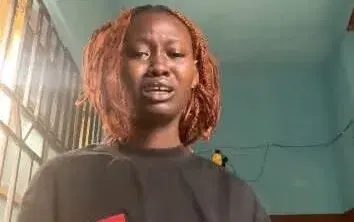
What started as a tearful social media plea by young TikToker Mirabel has escalated into a criminal investigation, nationwide outrage, and a critical debate in Nigeria on the consequences of false rape allegations. Ayooluwa Ayobami mirrors how fabricated claims like Mirabel’s can harm real victims and highlights the need for false accusers to face the full weight of the law, regardless of public sympathy.
Abigail Nsuka, popularly known as Mirabel on TikTok, had claimed she was raped in her apartment in the early hours of Sunday, February 15.
Within hours, her emotional video went viral, amassing over seven million views and drawing sympathy from thousands of Nigerians, including celebrities.
Among those who reacted was singer and actress Simisola Bolatito Kosoko, popularly known as Simi, who joined calls for justice.
ADVERTISEMENT
In the video, Mirabel, amid sobs, narrated how an alleged intruder attacked her.
“I have insomnia. If I’m not drunk or high, I can’t sleep. So, on Saturday, I drank, and it wasn’t working. But I needed to be high enough so I could sleep,” she said.
She claimed she slept around 6am and woke up at about 9am to a knock on her door.
READ ALSO: Lagos Reacts to Viral S3xual Assault Claim, Seeks Help in Locating TikToker
“I was still drunk and had a headache. Immediately I opened the door, I was pushed back… I hit my head on the fridge when I was pushed back, and I passed out. When I opened my eyes, there was a man over me.
“There was a cloth tucked in my mouth, and I was tied. I was just there mumbling, hoping somebody could hear me,” she said.
ADVERTISEMENT
Mirabel further alleged that the attacker inserted a blade into her private parts to make her bleed.
“Later on, I was bleeding. I didn’t know why I was bleeding… It turns out this person inserted a face blade into my body and cut me so I could bleed,” she added.
As outrage spread, Mirabel shared her bank details and reportedly received donations from sympathisers. Social media influencer Martins Otse, also known as Very Dark Man, claimed he transferred N100,000 to her, while others publicly disclosed various sums sent.
However, cracks soon appeared in her story. Some social media users analysed screenshots she shared and alleged similarities between her writing style and the messages she attributed to the supposed attacker. A neighbour also reportedly dismissed her claim of attempting suicide by drinking Sniper.
Amid mounting scrutiny, Mirabel allegedly admitted in a recorded audio conversation that she fabricated the story.
ADVERTISEMENT
“I used to masturbate, and I’m a lesbian. I often self-harm when I have panic attacks. It might be a hallucination,” she said.
She also admitted creating a separate TikTok account to send herself messages to make it appear as though a rapist had contacted her.
The reported confession stunned supporters and triggered widespread anger, with many donors demanding refunds. Mirabel is now in the custody of the Ogun State Police Command.
Legal Implications: What the Law Says
Under Nigerian law, a person who knowingly makes a false rape allegation may face prosecution.
ADVERTISEMENT
Section 8 of the Violence Against Persons (Prohibition) Act criminalises falsely accusing someone of rape or other sexual offences, prescribing penalties including a fine of up to N200,000 or imprisonment for up to 12 months.
Section 125 of the Criminal Code provides for up to seven years’ imprisonment for giving false information to a public officer with intent to cause an investigation or injury to another person.
Similarly, Section 140 of the Penal Code prescribes penalties ranging from six months to seven years for giving false information to a public servant.
Section 24 of the Cybercrimes (Prohibition, Prevention, etc.) Act states that any person who knowingly sends false information through social media or other online platforms that causes annoyance, danger, insult or needless anxiety is liable to three years’ imprisonment, a N7m fine, or both.
Human rights lawyer Inibehe Effiong said Mirabel could face prosecution if the allegation is proven to have been deliberately false.
ADVERTISEMENT
“If she had reported the matter earlier to the police, and it is later found to be false, she can also be charged with giving false information to the police.
“In the event of conviction, she may go to jail. My position is that people who come out to make false accusations of rape should be severely punished,” he said.
Legal experts stress that not every unproven allegation amounts to a crime. A false rape alarm occurs when someone knowingly makes an untrue allegation of rape.
It is important to distinguish between:
- An unproven allegation (insufficient evidence)
- A withdrawn complaint
- A maliciously false accusation (knowingly fabricated)
Only the last category qualifies as a criminal false accusation.
ADVERTISEMENT
Impact on the Falsely Accused and Real Victims
Where an allegation is proven to be deliberately false, the accused may suffer arrest, detention, reputational damage, loss of employment and psychological trauma.
Even after exoneration, the stigma can linger.
At the same time, advocates warn that sensational false claims can undermine public trust and make it harder for genuine survivors to be believed.
Reacting to the development, Simi wrote: “Almost every woman I know personally has been sexually assaulted at some point in their lives… You can’t think it’s okay to shut people up from speaking up about assault because some people lie.”
ADVERTISEMENT
She added that people who lie should face consequences but stressed that real victims must not be silenced.
“How many of your male friends have they lied against? … Women are terrified to go out. Women in their homes are not safe either… STOP RAPING WOMEN!!”
Former Big Brother Naija housemate Natasha Akide, popularly known as Tacha, also weighed in.
“Rape is a very serious issue. Women should never weaponise rape for any reason, because at the end of the day, you are taking away from the real victims,” she said.
She, however, maintained that admitting to fabrication does not erase the reality of sexual violence.
ADVERTISEMENT
“I am not going to back down from the fact that women still do get raped… There are real victims out there,” she said, adding that false accusations “toy with your mental health.”
Prosecutions for false rape claims remain relatively rare, amid concerns that overly harsh penalties could discourage genuine victims from reporting sexual assault.
Yet others argue that punishment must be proportionate to the potential harm caused, noting that reputational damage is often irreversible.
As investigations continue, the case has reignited a difficult national conversation: how to protect genuine survivors of sexual violence while ensuring that those who deliberately fabricate allegations face appropriate legal consequences.
For now, the question remains whether the law will take its full course, and how the balance between justice for victims and accountability for false accusers will be maintained.
ADVERTISEMENT