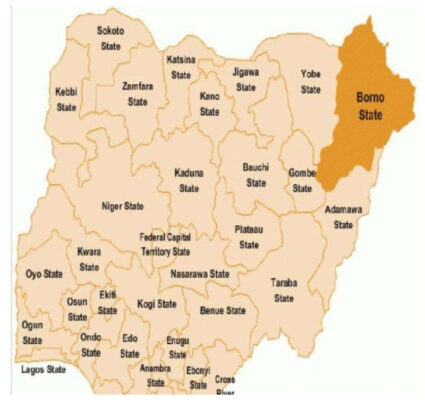
Scores of fighters have reportedly been killed following renewed clashes between rival insurgent groups, Boko Haram and the Islamic State West Africa Province (ISWAP), in parts of Sambisa Forest and the Mandara Mountains in Borno State.
Security sources said the violence, which lasted for about a week, began on January 3 when ISWAP fighters launched coordinated attacks on Boko Haram camps around the Ali Ngulde axis of the Mandara Mountains.
According to the sources, the ISWAP offensive was led by two commanders identified as Jundullah and Ibn Hataf, but met stiff resistance from Boko Haram fighters who mounted counter-attacks under the coordination of a field commander known as Abu-Rijal, also referred to as Ba-Sulhu.
Dozens of ISWAP fighters were reportedly killed during the initial encounters, while others were captured. Several weapons, including rifles, a machine gun and other arms and ammunition, were also said to have been recovered.
However, the balance of the fighting reportedly shifted days later.
On January 6, ISWAP fighters were said to have carried out a retaliatory attack on a Boko Haram position in the Sabil Huda axis, leading to hours of intense fighting.
Security sources claimed that at least 12 Boko Haram fighters were killed during the clash, with additional weapons seized by ISWAP forces.
The fighting reportedly triggered the displacement of Boko Haram-affiliated families, including women and children, from affected camps to areas around the Yale General axis.
Sources added that limited night operations were conducted to track fleeing fighters, although no further confirmed clashes had been recorded as of midweek.
The renewed violence underscores the long-standing rivalry between Boko Haram and ISWAP, which is driven by ideological differences, leadership disputes and competition for territory, resources and fighters.
Security sources said both factions are believed to be regrouping and rearming, raising concerns over the possibility of further confrontations in the coming days.