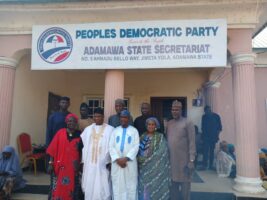

The Peoples Democratic Party (PDP) is charting a new course by returning to its grassroots to raise funds, aiming to curb godfatherism that has long undermined the party’s operations.
Comrade Ini Ememobong, National Publicity Secretary of the Tanimu Turaki-led faction, spoke on the party’s strategy at the weekend, highlighting efforts to rebuild and reclaim power from the All Progressives Congress (APC) in 2027.
Ememobong explained: “Life is a curve; you go from the bottom to the apex and back down again. We started from zero in 1998, ruled for 16 years, and then began a descent. We have reached the bottom of the valley, and now we are heading back up. This is a rebirth process, which is always painful. We are analysing our mistakes and successes.
“We have both ‘qualitative’ and ‘quantitative’ voices in the party. While the qualitative voices (the elite) are important, democracy is a game of numbers. We are balancing these while navigating the court process. Simultaneously, we are using a ‘poly-opportunity strategy’—fighting in court while conducting grassroots mobilisation and stakeholder engagement.
READ ALSO: PDP Hails Armed Forces, Calls For Better Welfare
“The strategy is simple: go back to the people. You need funding to entice people, but when people are with you voluntarily, they fund the cause. In 1998, people brought small contributions to fund the party, and that gave them a voice.
“When Governors took over the funding, the people were pushed aside. We are returning to that voluntary model. If 60 million Nigerians give N10,000 each, that is a huge sum. We are seeing this mass movement already in states like Plateau and Akwa Ibom.”
Read Also
On collaboration with other parties for upcoming elections, Ememobong was firm. He stated: “The FCT is historically PDP territory at the local government level. We are reaching the ‘500 people’ directly rather than through one elite ‘gatekeeper.’
“Regarding Ekiti, our candidate emerged cleanly. We are going to court to ensure INEC recognises that process.
“As for a merger, the time for that hasn’t matured. We are in an ‘embryonic stage’ of collaboration. We have an understanding among the opposition because we face a common adversary—the ruling party, which won with less than 40% of the vote. We refrain from attacking other opposition parties like the Labour Party or ADC because we are focused on the larger goal.”
Turning to national concerns, Ememobong gave a sober assessment of the security and economic landscape in 2026, saying: “The outlook is gloomy. We are seeing a ‘normalization of insecurity’ where feeling unsafe is the standard.
“We need comprehensive, sustainable solutions, not makeshift ones like using NYSC camps for police training. The best ambassadors to change the narrative aren’t PR firms in Washington, but the citizens in Benue, Plateau, and Borno who live these realities every day.”
This renewed focus on grassroots engagement and voluntary funding marks a significant shift in PDP strategy, with party leaders emphasising the need to empower ordinary members while pursuing justice and political accountability through the courts.