The Federal Government of Nigeria has reaffirmed its commitment to expanding Transnational Education (TNE) as a key strategy for improving access, quality, and sustainability in higher education across Africa.
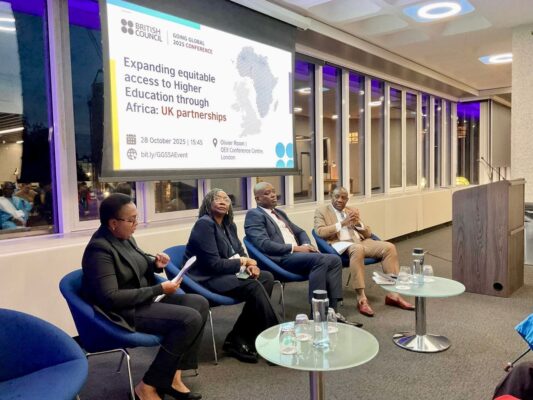
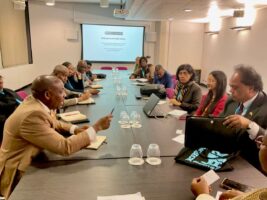
Minister of Education, Chief (Dr.) Maruf Olatunji Alausa, stated this in London while leading Nigeria’s delegation to the 2025 Global Education Partnership and Going Global Conference on Transnational Education, which brought together education ministers and stakeholders from Ghana, Mauritius, Indonesia, and Egypt.
Dr. Alausa explained that the TNE model would enable Nigerian students to benefit from globally competitive education within the country, reducing the financial burden of studying abroad while strengthening institutional capacity and academic standards.
He described the initiative as part of Nigeria’s strategic shift from uncoordinated overseas study programmes to a more structured and sustainable domestic education framework.
According to him, attracting leading global universities to Nigeria is aligned with President Bola Ahmed Tinubu’s Renewed Hope Agenda, which places education at the centre of national development.
During the conference, Dr. Alausa held bilateral meetings with Sir Steve Smith, the UK’s International Education Champion, and Donna McGowan, Country Director of the British Council Nigeria.
Both officials reaffirmed their countries’ commitment to supporting equitable and sustainable partnerships in higher education.
Sir Steve Smith hailed the new UNILAG–University of Birmingham Transnational Education Campus as “a model of institutional strengthening rather than a profit-oriented venture,” while McGowan described it as “a true partnership of equals,” emphasizing the British Council’s support for aligning UK institutions with Nigeria’s TNE policy framework.
READ ALSO: UNGA: Minister Alausa Advocates Global Commitment to Education
The newly launched campus builds on existing Nigeria–UK collaborations, such as the UNILAG–University of Dundee joint LLM programme, expanding opportunities for joint research, academic exchange, and innovation.
Highlighting the University of Lagos’s growing role as a regional innovation hub, Dr. Alausa revealed that more than 120 students have received training in Artificial Intelligence and Machine Learning through TNE-supported programmes.
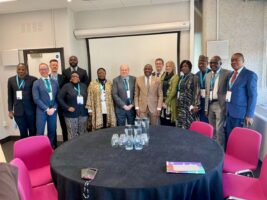
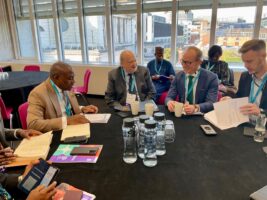



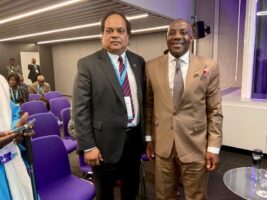
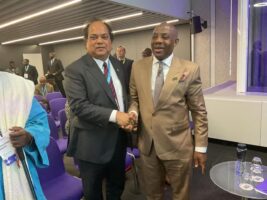
He also announced plans by the Federal Government to establish regional admission offices to boost intra-African student mobility and collaboration in emerging fields such as AI, robotics, and coding.
The Executive Secretary of the National Universities Commission (NUC), Professor Abubakar Rasheed Abdullahi, commended the milestone, urging greater attention to accreditation systems, regulatory coordination, and infrastructural investment to maintain quality and public confidence in TNE initiatives.
Similarly, the Vice-Chancellor of the University of Lagos, Professor Folasade Ogunsola, reaffirmed the university’s dedication to advancing innovation through co-developed TNE models that combine faculty development, digital learning, and industry collaboration. She pledged that UNILAG would continue to strengthen its research and partnership programmes beyond initial funding stages.
The launch of the UNILAG–Birmingham campus marks a significant step in Nigeria’s pursuit of globally integrated higher education, fostering international collaboration while empowering local institutions to deliver world-class academic standards.