The National Museum, Lagos State, has brought history to life again by spotlighting two of Nigeria’s most iconic relics, the Dufuna Canoe and the Lord Lugard Footbridge.
By bringing these relics back into the public spotlight through interactive education, the museum is not just preserving wood and iron but also inviting Nigerians to rediscover the master craftsmanship of their ancestors and the architectural milestones that shaped the modern nation.
In a joint statement, the Lagos State Chief Museum Education Officer, Ekundayo Nunayon Iroko, and the Assistant Director Curator of the National Museum Owerri, Nancy Chizomam Ikpe, announced a new drive to boost tourism and foreign interest and to educate the public on Nigeria’s socio-cultural heritage.
The Dufuna canoe: A journey into Nigeria’s ancient waterways
Introduction
In the quiet landscapes of northeastern Nigeria, near the village of Dufuna, lies a remarkable link to the distant past, the “Dufuna Canoe”.
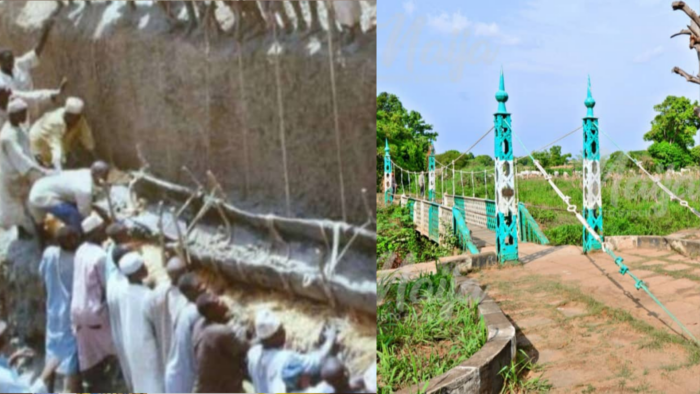
According to the museum, it is a dugout canoe discovered in 1987 by a Fulani cattle herdsman (Malam Ya’u), a few kilometres from the village of Dufuna in the Fune Local Government Area, not far from the Komadugu Gana River in Yobe State, Nigeria.
The museum disclosed that the radiocarbon dating of a sample of charcoal found near the site dates the canoe at 8,000 years old, linking the site to Lake Chad.
The canoe is 8.4 metres (28 ft) long and is 0.5 metres (1 ft 8 in) tall at its largest point. It is currently located in Damaturu, Nigeria. This ancient wooden canoe is estimated to be over 8,000 years old, making it the oldest known watercraft in Africa.
The Dufuna canoe is the world’s second-oldest known boat. More than just a relic, the canoe serves as a bridge connecting modern Nigeria with the ingenuity, culture, and daily life of prehistoric communities.
A discovery that changed history
According to the museum, the canoe was discovered when villagers noticed unusual wooden remains protruding from the riverbank.
Archaeologists realised the significance of the find, and the radiocarbon dating revealed that it dates back to around 6,000 BCE, placing it in an era when early human societies were beginning to develop sophisticated tools, trade, and settlement patterns.
The Dufuna Canoe instantly became a key piece in understanding prehistoric West Africa and its technological achievements.
A window into ancient life
Carved from a single tree trunk, the canoe measures approximately 8 meters in length and 0.5 meters in width, reflecting exceptional craftsmanship.
Its design indicates that early communities had a deep understanding of woodworking, buoyancy, and river navigation. The canoe likely served multiple purposes: fishing, transporting goods, and facilitating communication between settlements along waterways.
It offers a rare glimpse into how rivers shaped social, economic, and cultural life in prehistoric Nigeria.
Preserving an ancient treasure
The preservation of the Dufuna Canoe posed significant challenges. After millennia submerged in water, the wood became fragile and prone to decay once exposed to air. Archaeologists and conservators employed advanced methods, including chemical stabilisation and controlled drying, to ensure the canoe’s survival. Today, it is housed at Nigeria’s National Museum in Damaturu, where it continues to inspire curiosity about Africa’s prehistoric past.
Cultural significance
The Dufuna Canoe is more than an archaeological artefact; it embodies the ingenuity, adaptation, and survival skills of early African societies. Its discovery challenges long-held assumptions about the technological sophistication of prehistoric communities in the Sahel region. The canoe offers insights into social organisation, trade networks, and the relationship between humans and rivers, emphasising the central role waterways played in shaping the cultural landscape.
The canoe’s legacy
Beyond its physical presence, the Dufuna Canoe symbolises human resilience and innovation. It bridges a gap of 8,000 years, connecting modern Nigerians to the lives of their ancestors. Its discovery has prompted further archaeological exploration in the region, highlighting the richness of Nigeria’s prehistoric heritage and reinforcing the importance of cultural preservation.
Conclusion
In conclusion, the museum noted that the Dufuna Canoe is more than an ancient artefact, it is a time capsule that links the present with a distant past.
From the riverbanks of Komadugu Gana to the halls of the National Museum, the canoe tells a story of ingenuity, adaptation, and the enduring human spirit.
The museum stressed that for anyone interested in the history of Nigeria and Africa, the canoe stands as a reminder that the rivers of the past still carry the stories of our ancestors.
The Lord Lugard Footbridge
Introduction
The Lord Lugard Foot Bridge, located in Lokoja, Kogi State, stands as an enduring relic of Nigeria’s colonial era. Associated with Sir Frederick Lugard, the first Nigerian colonial governor who ruled from 1914 to 1919.
Lugard, a central figure in the formation of modern Nigeria, the bridge represents early colonial infrastructure development and administrative organisation.
According to the museum, the infrastructure built during colonial rule often served both practical and symbolic functions.
The museum emphasised that the Lord Lugard Foot Bridge is one such structure, situated in Lokoja, which at the time was an important administrative town during the colonial period, and closely tied to the early 20th-century governance system established by British authorities.
The museum further stressed that Lokoja held a strategic importance due to its location near the confluence of the Niger and Benue Rivers, making it a logistical and political hub during the establishment of colonial administration.
Historical framework
According to the museum, Frederick Lugard played a pivotal role in British colonial governance in Nigeria, as the High Commissioner of the Northern Protectorate and later Governor-General after the 1914 amalgamation. He influenced administrative and infrastructural policies that shaped the colonial state.
The footbridge is believed to have been constructed to facilitate movement within government quarters and between administrative buildings in Lokoja.
During this period, infrastructure projects were undertaken to support governance, communication, and military coordination.
Architectural characteristics
Although modest in scale compared to major colonial constructions, the bridge demonstrates key characteristics of early colonial engineering, including functional pedestrian design, durable materials suited to the local environment, and an elevated structure allowing passage over water channels or uneven terrain.
The museum revealed that the bridge’s simple design reflects practicality rather than ornamentation, aligning with its administrative purpose.
Socio-political importance
The Lord Lugard Foot Bridge is more than a physical crossing point, and it symbolises the early institutional framework of colonial Nigeria.
The footbridge represents the expansion of British administrative control, the transformation of Lokoja into a colonial headquarters and the infrastructural foundations of modern governance systems.
The museum further explained that the footbridge also serves as a reminder of the broader colonial experience and its lasting effects on Nigeria’s political and social development.
Contemporary relevance
Today, the bridge is regarded as a heritage landmark in Lokoja, which attracts historians, students, and visitors interested in Nigeria’s colonial past.
As discussions about heritage preservation grow, the museum emphasised that structures like the Lord Lugard Footbridge highlight the importance of conserving sites that embody significant historical transitions.
Conclusion
In conclusion, the museum explained that the Lord Lugard Footbridge remains a modest yet meaningful monument within Nigeria’s historical landscape. Despite its small physical scale, it holds considerable historical weight.
It stands as a testament to colonial-era infrastructure, administrative expansion, and the origins of modern Nigerian statehood.