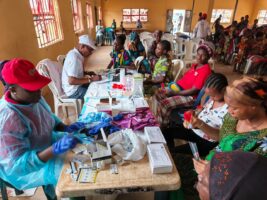
The Nigeria Centre for Disease Control (NCDC) has raised an alarm over the spread of Lassa fever among health workers nationwide.
In an advisory released on Monday, via its official X handle, the disease control agency disclosed that two health workers have been killed, while 15 other confirmed cases of Lassa fever have been documented among health care workers as Nigeria continues to respond to the ongoing Lassa fever outbreak.
NCDC expressed its sympathy to the affected personnel, urging all healthcare workers to maintain a heightened index of suspicion and strictly implement Infection Prevention and Control (IPC) measures.
NCDC noted that strict adherence to IPC practices is critical to preventing further transmission and protecting frontline responders.
“Recent surveillance data indicate a concerning increase in Lassa fever infections among healthcare workers, with 15 confirmed cases and 2 deaths recorded as of Epidemiological Week 7.
Healthcare worker infections have been reported across multiple states, including the known high-burden areas such as Ondo, Edo, Bauchi, Taraba, Ebonyi, and Benue, with specific hotspots often identified at the LGA level.
“As part of its mandate, NCDC investigates every healthcare worker infection to identify drivers of transmission and prevent further cases. Recent findings reveal gaps in infection prevention and control practices, as well as missed risks of exposure in certain departments.
“These gaps have resulted in IPC strategies that are misaligned with actual exposure risks, with fatal consequences.”
The disease control agency explained that key risk factors in healthcare settings include low index of suspicion for febrile illnesses, inconsistent or improper use of PPE, exposure in outpatient departments and general wards, poor hand hygiene practices, and the delay in reporting and care-seeking.
The agency further advised that the essential IPC Measures include applying standard precautions to all patients at all times, performing hand hygiene before and after every patient contact, using appropriate PPE based on risk assessment and ensuring proper environmental cleaning and waste.