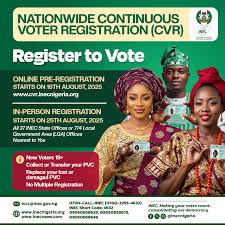
The Chairman of the Independent National Electoral Commission, INEC, Professor Joash Amupitan, has announced plans for a nationwide voter revalidation exercise aimed at cleaning up Nigeria’s 93-million voter register ahead of the 2027 General Election.
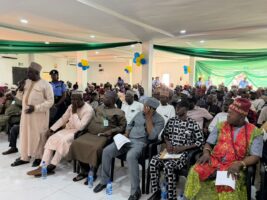
Speaking at his first quarterly consultative meeting with Civil Society Organisations in Abuja, Professor Amupitan said the Commission is responding to what he described as persistent challenges, including under-age registration, multiple registrations, and the continued presence of deceased persons on the voters’ roll.
According to him, strengthening the integrity of the voter register is central to restoring public confidence in the electoral process.
He said no election can be considered credible if Nigerians do not trust the register used in conducting it.
However, the announcement has also sparked legal and constitutional concerns among election stakeholders, as the Electoral Act 2022 provides for continuous voter registration and revision of the register, but does not clearly define or authorise a process described as “revalidation.”
Some civil society groups and legal experts argue that if revalidation becomes compulsory for already-registered voters, it could amount to an additional requirement not explicitly provided for by law, and may potentially disenfranchise millions of voters.
INEC is also expected to face questions on whether the proposed exercise will be voluntary, how it will be implemented nationwide, and whether it will involve physical appearance, biometric recapture, or digital verification.
Beyond preparations for 2027, Professor Amupitan also outlined INEC’s 2026 election calendar.
He confirmed that the FCT Area Council elections will hold on February 21, alongside bye-elections in Rivers and Kano states.
He added that governorship elections are scheduled for Ekiti State on June 20 and Osun State on August 8.
The INEC Chairman also disclosed that 171 associations have applied to be registered as political parties.
While many reportedly failed to meet constitutional requirements, he said successful associations will soon be announced.
He ended by urging Civil Society Organisations and other stakeholders to support voter education efforts, address rising voter apathy, and promote inclusion, especially for women and young people.
He also warned political actors to avoid hate speech, vote buying, and other electoral offences as political activities ahead of 2027 begin to intensify.