The Federal Government has announced that no fewer than nine million Nigerian households have already benefitted from its ongoing cash transfers under the Household Prosperity and Empowerment Cash Transfer Programme (HoPE-CT) initiative, as efforts intensify to reach a target of 15 million households nationwide.
The Minister of Humanitarian Affairs and Poverty Reduction, Dr Bernard Doro, disclosed this while appearing on TVC News’s Politics on Sunday, noting that the intervention is aimed at cushioning the impact of current economic realities on vulnerable citizens.
According to the minister, the programme is being implemented in phases, beginning with what he described as “shock-responsive transfers” designed to provide immediate relief to struggling households. He noted that the government is not only focused on disbursement but also on ensuring transparency and long-term impact.
He said, “We are looking at this in phases. The first phase involves the immediate shock-responsive transfers to help families deal with the current economic realities. Success for us is measured by two things: verification and sustainability.
“The timeline is aggressive because the need is urgent. We are working around the clock to ensure that the bulk of these disbursements happen within the next quarter. But more importantly, as I mentioned earlier, this isn’t just about the cash. We are tracking how many of these beneficiaries are successfully transitioned into our ‘Exit Strategy’—moving from support to self-sustenance.”
ADVERTISEMENT
When questioned about how people who don’t have smartphones or basic bank accounts will be captured in a digitalised system of disbursement, the Minister said, “That is why we use a ‘Hybrid Model.’ For those with accounts, it’s a direct transfer. For those in the most rural areas without traditional banking, we deploy verified payment agents who go to these communities. They use offline biometric devices to confirm the identity of the beneficiary before the cash is handed over. No identity, no payment. This is how we protect the integrity of the taxpayers’ money.”
Regarding concerns raised over ‘middlemen’ and local officials allegedly diverting funds, Dr Doro explained that a robust verification process underpins the initiative, combining the National Social Register with Bank Verification Numbers (BVN) and National Identification Numbers (NIN) to ensure that funds reach only verified beneficiaries.
The Minister further explained that the approach is helping to eliminate the long-standing issue of “ghost” recipients, disclosing that the federal government has adopted a largely digital payment system to curb leakages and prevent interference by middlemen.
For beneficiaries without access to formal banking services, the ministry deploys accredited payment agents equipped with biometric verification tools to authenticate recipients before funds are released.
He said, “We have already begun the roll-out. The verification process is critical because we are using the National Social Register, but we are also cross-referencing it with the Bank Verification Number (BVN) and National Identification Number (NIN). This ensures that the money goes directly into the hands of the verified heads of these 15 million households.”
Read Also
ADVERTISEMENT
Addressing concerns about financial inclusion, the minister said the programme operates a hybrid model that accommodates both banked and unbanked Nigerians, particularly those in remote and rural communities.
Dr Doro also spoke about the human impact of the initiative, sharing stories from the field where beneficiaries have used the funds to support small businesses and household needs.
He cited examples of individuals investing in petty trading and vocational tools, describing such outcomes as the true measure of success.
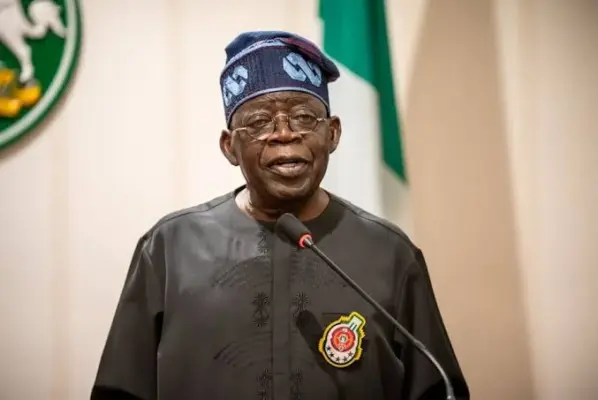
Dr Doro emphasised that the directive of President Bola Ahmed Tinubu is to ensure that no Nigerian is left behind.
He stressed that the government is determined to extend the reach of the programme to the “last mile,” ensuring that the most underserved communities benefit from the intervention.
ADVERTISEMENT
“The mood is one of gratitude but also high expectations. When I was in the field, I met a woman who used her first few months of transfers to buy a sewing machine. That is the HoPE-CT success story we want. We are not just giving them fish; we are providing the initial support for them to learn how to fish.”
“The President’s directive is clear: no Nigerian should be left behind. We are currently cleaning up the register to add more households, especially from the ‘urban poor’ category, who were previously underserved. We are hitting the 15 million household target step-by-step, ensuring every kobo is accounted for,” the Minister expressed.
Responding to the concern raised about the sustainability of the initiative amid inflation and how millions of Nigerians will be taken out of extreme poverty, the Minister said, “That is a valid concern. But social protection is a two-pronged approach.”
“While we provide immediate relief to tackle inflation and the cost of living, we are simultaneously integrating these beneficiaries into vocational training and small-scale business grants. We want a situation where, after six months or a year of support, a household has a trade or a small business that sustains them,” Dr Doro concluded.