The Federal Government has initiated a sweeping inter-agency review of a proposed $200 billion integrated infrastructure project, signaling caution over what could become one of Nigeria’s most far-reaching development undertakings.
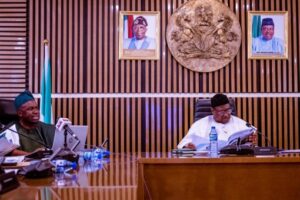
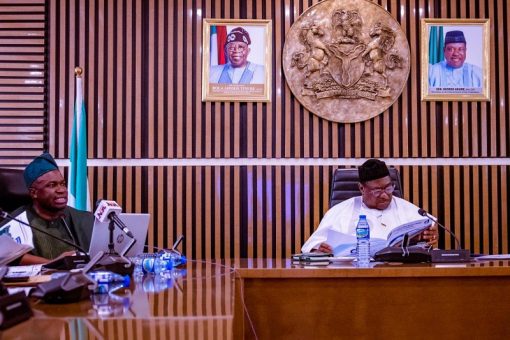
The panel, inaugurated in Abuja by the Secretary to the Government of the Federation, George Akume, is tasked with scrutinising the technical, financial and regulatory framework of the proposal before any final approval is considered.
At the centre of the review is a submission by De-Sadel (Nig.) Limited in partnership with China Liancai Petroleum Investment Holdings Limited, proposing a multi-phase system that combines gas production, power generation and a 4,000-kilometre high-speed rail network.
Rather than fast-tracking the proposal, the government is subjecting it to layered institutional checks, reflecting concerns about its scale, funding model and long-term implications for national finances.
ADVERTISEMENT
READ ALSO: FG Launches Learner Identification Number To Transform Education System
“I urge you to approach this assignment with the highest level of professionalism, objectivity and patriotism. Your recommendations will guide decisions at the highest level,” Akume told members of the committee.
He noted that preliminary inputs had already been received from security and financial intelligence agencies, particularly regarding the structure of the financing and the entities involved—an indication of heightened due diligence.
The proposed network is designed to connect major economic hubs including Lagos, Abuja, Kaduna, Kano and Port Harcourt, while simultaneously expanding electricity supply through gas-powered infrastructure.
Officials say the project, if deemed viable, could reshape transportation, strengthen energy security and accelerate industrial growth. However, the government insists that viability—not ambition—will determine its fate.
The committee, comprising representatives from key ministries and regulatory bodies, has been mandated to verify proof of funds, assess sovereign risk exposure, and evaluate the technical competence of the promoters.
ADVERTISEMENT
It will also examine rail design plans, compliance with local content laws, environmental standards and any potential security or reputational concerns before advising on whether the proposal should proceed to the Federal Executive Council.
Promoters of the project argue it could establish a new infrastructure backbone for the country. Managing Director of De-Sadel Consortium, Samuel Ukoh, said the initiative would integrate rail transport, gas-based power generation, fibre optics and real estate development around transit hubs.
He disclosed that the first phase would span about 1,700 kilometres, linking Abuja, Lagos, Kano and Port Harcourt, with trains projected to run at speeds of up to 350 kilometres per hour.
According to him, the initial phase could cut travel time between Lagos and Abuja to roughly two hours and 30 minutes while generating about 3,500 megawatts of electricity to power the system. At full scale, output is projected to reach 8,500MW.