
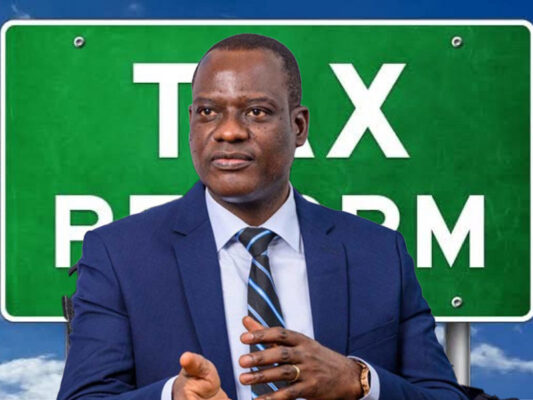
The Chairman of the Presidential Committee on Fiscal Policy and Tax Reforms, Taiwo Oyedele, has said the Federal Government will not jeopardise Nigeria’s future by shielding individuals or organisations that have avoided paying taxes for years.
Oyedele made the statement at the January business breakfast of the Franco-Nigerian Chamber of Commerce and Industry in Lagos, where he addressed resistance to ongoing tax reforms and Nigeria’s weak revenue performance.
He said Nigeria’s tax collection remains far below its potential when compared with countries of similar size. Citing South Africa as an example, Oyedele noted that the country generated over N60 trillion from personal income tax in 2024 — more than Nigeria’s total tax revenue from all sources combined.
While acknowledging South Africa’s higher per capita income, he argued that Nigeria could significantly improve its personal income tax performance if reforms are properly implemented.
“If you take the top 60 million Nigerians by income, it will be comparable to South Africa’s per capita income,” he said.
Oyedele questioned why Nigeria’s revenue remains low, adding that even if the country could not raise N60 trillion, it should at least be able to collect N30 trillion annually. However, he disclosed that Nigeria generated less than N3 trillion from personal income tax, describing the situation as unacceptable.
He explained that the wide revenue gap is one of the reasons the reforms are facing resistance.
“The people fighting these reforms are not telling you why. It is because they made money for so long and never paid taxes,” Oyedele said.
He insisted that the government is committed to building a system where no one is above the law, stressing that the reforms are necessary despite the discomfort associated with paying taxes.
“We will not compromise the future of the country. What is at stake is much bigger than any of us,” he added.
President Bola Ahmed Tinubu signed four tax reform bills into law on 26 June 2025. The new tax regime is scheduled to take effect from 1 January, despite calls in some quarters for a delay in implementation.