The Minister of Education, Dr Maruf Tunji Alausa, says the administration of President Bola Tinubu remains committed to the development of non-formal education as part of efforts aimed at job creation and youth empowerment across the country.
According to the minister, the President Bola Tinubu-led federal government, through the education ministry, is relentless in its push to empower the out-of-school children through informal education while also empowering those undergoing formal education with entrepreneurial skills, which is part of non-formal education.
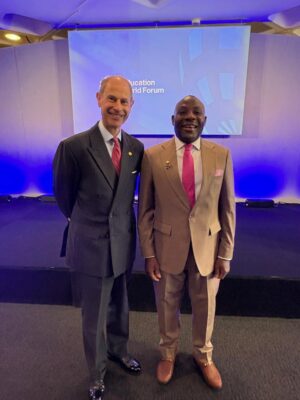
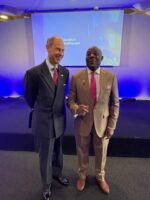
The minister spoke on Tuesday during a special plenary session moderated by His Royal Highness, Prince Edward, the Duke of Edinburgh, at the ongoing Education World Forum (EWF) in London, United Kingdom.
The special session discussed the importance of non-formal education and soft skills, and provided the three participating education ministers with an opportunity to talk about the importance of non-formal education and soft skills, and understand how industry can also be involved, to enable the well-being of individuals, and basic employability skills.
ADVERTISEMENT
During his presentation, Dr Alausa explained Nigeria’s government-wide array of informal education programmes targeting out-of-school youths, adults, and vulnerable populations.
These initiatives, according to him, are designed to bridge literacy gaps, provide vocational and technical skills, and integrate less privileged or marginalised groups into the economy
“What we are doing in Nigeria is because we have a lot of out-of-school children, we have to find a way that we can quickly get them a kind of non-formal education,” he said.
“We’ve created a separate curriculum for them called the accelerated basic education program, which ties them to what they should be learning in school. We’ve heavily focused on technical vocational education, which is still a form of formal education but in a non-formal setting to give people who have gone to school other skill sets that they can use to benefit themselves, benefit their community. Most of our youths are in schools, and we as a government have to find a way to give them other forms of non-formal education while they are within the formal setting,” the minister added.

ADVERTISEMENT
Read Also
Amongst the programmes highlighted by the minister is the TVET initiative, which is a flagship programme by the federal ministry of education offering tuition-free vocational training, stipends, and start-up support to close skills gaps and boost entrepreneurship and the national policy on skills development, which promotes flexible learning pathways by integrating hands-on training, digital literacy, and vocational skills for out-of-school youths and adults.

Others are the programmes for mass literacy, adult and non-formal education, which coordinate nationwide functional literacy, post-literacy, and continuing education programmes.
ADVERTISEMENT
He also touched on the Almajiri and out-of-school children education (NCAOOSCE) which focuses on integrating the traditional Quranic (Almajiri) system with basic and vocational skills training.
“We have also now infused what we call entrepreneurial training in these kids. Whatever level of courses they are studying, they go through our entrepreneurship, innovation, and business certification to equip them with the skills they need to be able to function and do things differently. We are also looking at the area of digital technology to train them and equip them with digital skills.”
The minister concluded his presentation by saying, “The whole goal of what we are doing here is to really get them the skills. Skills for the present and skills for the future. We are also looking at the other special abilities our teaming youths have.”
The minister lauded the Duke of Edinburgh for visiting Nigeria in November, 2025, while noting that Nigeria is part of the Duke of Edinburgh International Award Foundation.
ADVERTISEMENT