
Senior Special Assistant to the President on Community Engagement, Dr. Abiodun Essiet has concluded a three-day working visit to Kwara State with strategic engagements focused on addressing rising security challenges in parts of the state.
As part of the visit, she received the Executive Chairman of Edu Local Government Area and the Councillor representing Gbugbu Ward on a courtesy call. The meeting was prompted by recent security concerns in Gbugbu town and surrounding communities in Edu and Patigi Local Government Area.
The local government officials briefed Dr. Essiet on the situation in their communities, highlighting the impact of insecurity on residents and local economic activities. They called for stronger collaboration with security agencies and relevant authorities to restore peace and stability in the affected areas.
Following the meeting, Dr. Essiet led a delegation to the headquarters of the 22 Armoured Brigade, which hosts the newly launched Operation Savannah Shield. The joint military operation was established to combat rising incidents of terrorism, banditry and kidnapping in parts of Kwara and neighbouring states.
Read Also
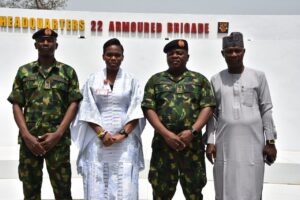



During the visit, the delegation held extensive discussions with the Theatre Commander, Major General Yakub Yahaya, and the Commander of the 22 Armoured Brigade, Brigadier General N. N. Rume. Talks focused on the prevailing security situation, ongoing military operations and the need for sustained cooperation between security forces and local communities.
Dr. Essiet also presented feedback from a recent Citizens’ Assembly session held in Omu-Aran, located in Ifelodun Local Government Area, where residents expressed concerns about safety and called for enhanced security presence.
Stakeholders at the meeting emphasized the importance of intelligence sharing, community engagement and sustained dialogue in strengthening security responses. The military leadership reaffirmed its commitment to restoring calm and protecting lives and property in affected communities.
The engagements, according to Dr. Essiet, are expected to reinforce ongoing security efforts and help restore public confidence, enabling residents to safely return to their normal social and economic activities.