
The Federal Government of Nigeria has said the economic and governance reforms introduced by President Bola Ahmed Tinubu are improving global confidence in Nigeria and opening new opportunities for trade, investment and international partnerships.
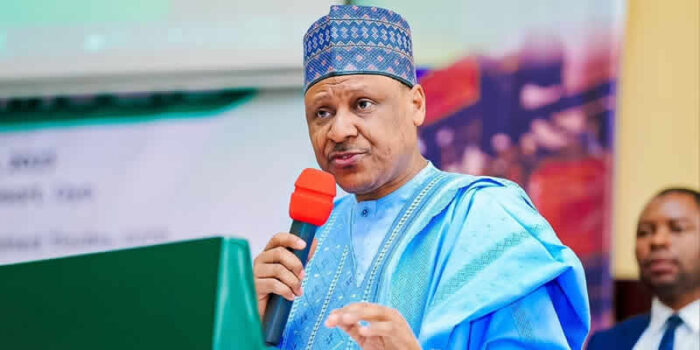
The Minister of Information and National Orientation, Mohammed Idris, disclosed this during a world press conference in London ahead of Tinubu’s official visit to the United Kingdom at the invitation of Charles III.
According to the minister, the visit underscores the longstanding diplomatic and economic relationship between Nigeria and the United Kingdom and will provide an opportunity to strengthen cooperation in areas including trade, security, climate action, education and technological innovation.
Idris noted that Nigeria’s democracy has remained stable with over two decades of uninterrupted democratic governance since 1999, supported by strong institutions, civil society organisations and a vibrant media environment.
He said the Tinubu administration’s Renewed Hope Agenda is focused on stabilising the economy, expanding opportunities for citizens, strengthening social protection and driving sustainable national development.
Highlighting key reforms, the minister said the removal of petrol subsidy and the unification of multiple foreign exchange windows were introduced to enhance fiscal transparency, improve economic sustainability and boost investor confidence.
He added that reforms in the oil and gas sector have positioned Nigeria as Africa’s most attractive destination for energy investment for two consecutive years, attracting more than eight billion dollars in Final Investment Decisions from international oil companies.
Idris also revealed that the government will soon launch a Customs Single Window, a unified digital platform aimed at streamlining documentation processes and improving efficiency in international trade.
According to him, Nigeria recently exited the Financial Action Task Force grey list after implementing measures to tackle money laundering and illicit financial flows, a development he said has strengthened the country’s credibility within the global financial system.
He further disclosed that the government is implementing reforms in the mining sector to promote transparency and ensure that only credible investors participate in the development of Nigeria’s mineral resources.
The minister said early indicators suggest that the reforms are already yielding results, with improved investor confidence across key sectors.
Read Also
Idris said inflation has declined significantly since 2023, trade surplus continues to grow and the Central Bank of Nigeria Purchasing Managers’ Index has recorded fifteen consecutive months of expansion.
He added that Nigeria’s external reserves have strengthened, exceeding 50 billion dollars as of February 2026, with part of the reserves now held in gold as part of diversification efforts.
The minister also highlighted major infrastructure projects currently underway across the country, including the Lagos–Calabar Coastal Highway, the Sokoto–Badagry Super Highway, and the Ajaokuta–Kaduna–Kano Gas Pipeline, which he said are expected to improve connectivity and stimulate industrial growth.
In the power sector, Idris said initiatives such as the Presidential Power Initiative, the Presidential Metering Initiative, and the establishment of the Grid Asset Management Company are aimed at expanding electricity infrastructure and improving access to power nationwide.
On education, the minister said the Nigerian Education Loan Fund has enabled more than one million students to access higher education without upfront tuition payments.
Addressing security, Idris said the administration has strengthened intelligence sharing and operational coordination among security agencies to combat terrorism, banditry and organised crime while also expanding cooperation with international partners such as the United Kingdom and the United States.
He added that the Nigerian Navy, ranked Africa’s strongest naval fleet in the 2026 Global Firepower Index, is leading efforts to establish a Combined Maritime Task Force to enhance security in the Gulf of Guinea.
Idris reaffirmed Nigeria’s commitment to religious freedom, peaceful coexistence and national unity, describing the country’s diversity as one of its greatest strengths.
He also said Nigeria remains actively engaged in regional and global affairs through peacekeeping operations, diplomacy and collaboration on issues such as climate change, migration and energy security.
The minister assured that Nigeria remains open to responsible investors worldwide, noting that government policies support regulatory transparency, tax incentives and the full repatriation of profits.
He added that Nigeria is committed to strengthening its longstanding partnership with the United Kingdom in the years ahead.