
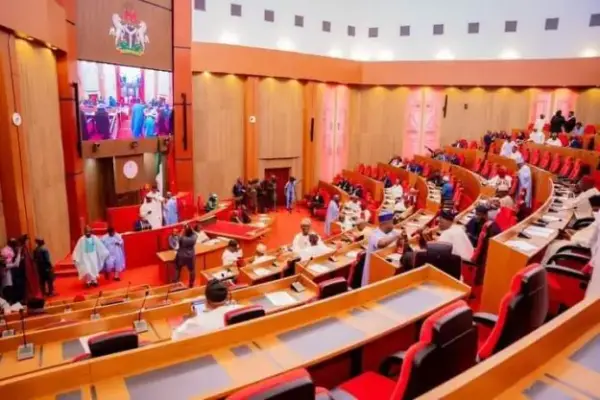
The Senate has scheduled an emergency plenary session for Tuesday, February 10, less than a week after concluding deliberations on the Electoral Bill 2026.
The decision was conveyed in a statement issued on Sunday by the Clerk of the Senate, Emmanuel Odo, who said the directive came from the President of the Senate, Godswill Akpabio.
All senators have been asked to reconvene for the special sitting, which is slated to begin at noon.
While the Senate did not disclose the agenda for the emergency session, the development comes amid growing public and political reactions to recent legislative actions on electoral reforms.
Last week, the Senate passed the Electoral Bill 2026 after extensive debate but rejected a key proposal that sought to make real-time electronic transmission of election results mandatory.
The controversial amendment focused on Section 60 of the Electoral Act, which regulates how polling unit results are transmitted.
READ ALSO: Abaribe Clarifies Senate’s Position on Electronic Transmission of Election Results
Lawmakers voted against a recommendation by the Senate Committee on Electoral Matters that would have required presiding officers to upload results immediately to the INEC Result Viewing (IReV) portal.
Read Also
Instead, the Senate retained provisions from the 2022 Electoral Act, which permit electronic transmission only after votes have been counted and results publicly announced at polling units.
Although the bill introduced notable changes to election timelines, penalties for electoral offences, and aspects of voting technology, the rejection of real-time transmission has continued to generate criticism.
The Independent National Electoral Commission (INEC) has also been affected by the ongoing amendments, as it is yet to release the timetable and schedule of activities for the 2027 general elections.
The commission has cited the legislative process, alongside concerns over the presence of deceased persons on the voters’ register, which has prompted plans for a nationwide verification exercise.
Civil society groups and political figures have strongly criticised the Senate’s decision. Former minister Oby Ezekwesili and groups such as Afenifere described the move as a setback to electoral transparency ahead of the 2027 polls.
Similarly, the African Democratic Congress (ADC) warned that delays in finalising amendments to the Electoral Act could expose political parties to legal and technical challenges as preparations for the next general election intensify.
Under the existing provisions retained by the Senate, presiding officers must count votes at polling units, record results on official forms, announce them publicly, and transmit the results electronically to the appropriate collation centres.
Copies of the results are also to be issued to polling agents and security personnel where available. Any violation attracts a fine of up to N500,000 or a minimum prison term of six months.