The Foundation for Peace Professionals has warned that a third global war could result in more than 500 million deaths, citing historical trends in warfare and the devastating potential of modern nuclear weapons.
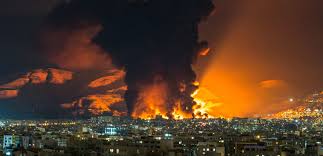
The warning comes amid the war in the Middle East involving United States, Israel and Iran, with analysts cautioning that the conflict could escalate into a broader regional or global crisis.
In a report titled “Global Escalation of Warfare and Projected Human Cost of a Potential World War III,” authorised by its Executive Director, Abdulrazaq Hamzat, the organisation highlighted a pattern of increasing casualties in successive global conflicts.
According to the report, World War I resulted in an estimated 10–20 million deaths, while World War II claimed between 50 and 70 million lives, marking a sharp increase driven by advances in military technology and the expansion of warfare to civilian populations.
PeacePro noted that modern warfare has entered a more dangerous phase with the advent of nuclear weapons, which are significantly more destructive than those used during the Second World War.
The report cited the Tsar Bomba test as the most powerful nuclear explosion ever recorded, with a yield far exceeding earlier atomic bombs.
It warned that today’s missile systems can carry multiple nuclear warheads capable of striking several cities simultaneously, meaning a large-scale nuclear exchange could devastate entire regions within minutes.
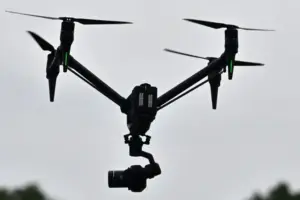
PeacePro said the ongoing conflict in the Middle East, marked by airstrikes, missile attacks and drone operations, has heightened fears that more countries could be drawn into the crisis.
The organisation also raised concerns over the vulnerability of critical global energy infrastructure, particularly the Strait of Hormuz, through which a significant portion of the world’s oil supply passes.
It warned that extended disruption in the corridor could trigger severe global economic consequences and further destabilise international security.
According to the report, casualties in a potential global conflict would stem from direct military strikes, nuclear detonations, radiation exposure, collapse of food and energy systems, economic breakdown and mass displacement.
The group also cautioned that large-scale nuclear warfare could lead to a “nuclear winter,” a scenario in which smoke and debris block sunlight and severely disrupt global agriculture.
PeacePro urged world leaders to prioritise diplomacy, strengthen nuclear arms control agreements and reduce geopolitical tensions to prevent escalation.
“Humanity has already witnessed the devastation of two world wars,” Hamzat said, warning that in the nuclear age, a third global conflict could amount to a civilisation-level catastrophe.
The organisation concluded that preventing another global war must remain a top priority for the international community to avoid what it described as the greatest human tragedy in history.