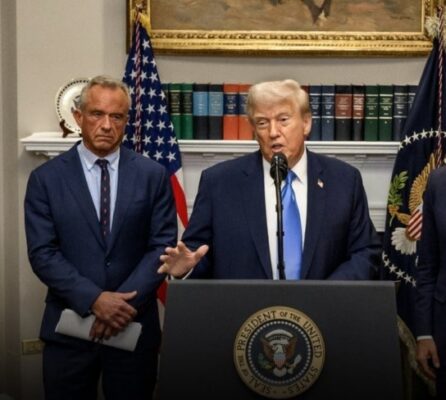
The President of the United States (US), Donald Trump, on Tuesday approved an expanded entry restriction on foreign nationals from 24 countries, citing “demonstrated, persistent, and severe deficiencies in screening, vetting, and information-sharing” that threaten the country’s national security and public safety.
The new immigration policy was published on the White House official website in a document titled “President Donald J. Trump Further Restricts and Limits the Entry of Foreign Nationals to Protect the Security of the United States.”
According to the proclamation document cited by TVC News, the new policy imposes full suspension on eight countries and partial suspension on 16 others, affecting immigrants and nonimmigrants on B-1, B-2, B-1/B-2, F, M, and J visas.
The administration described the move as necessary to “prevent the entry of foreign nationals about whom the United States lacks sufficient information to assess the risks they pose” and to enforce U.S. immigration laws while advancing national security objectives.
Trump defended the expanded entry restriction, saying, “During my first Administration, I restricted the entry of certain foreign nationals into the United States to prevent national security and public safety threats from reaching our borders. The Supreme Court upheld these restrictions.
“I reinstated these successful policies in Executive Order 14161 of January 20, 2025 (Protecting the United States From Foreign Terrorists and Other National Security and Public Safety Threats), and Proclamation 10949 of June 4, 2025 (Restricting the Entry of Foreign Nationals To Protect the United States From Foreign Terrorists and Other National Security and Public Safety Threats).”
The partial restrictions limit or suspend certain classes of visas (e.g., tourist, student, exchange), imposing stricter vetting and shorter visa validity, and often require more rigorous screening before entry is permitted.
While the full bans/suspensions generally bar citizens of specified countries, mostly countries proscribed as “country of particular concern” by the U.S government, from entering the country and block the issuance of most new immigrant and non-immigrant visas. Exceptions may still exist for lawful permanent residents, diplomats, or specific exempt categories.
Countries Affected By Partial Suspension
(Immigrants and Nonimmigrants on B-1, B-2, B-1/B-2, F, M, and J Visas)
Nigeria
For Nigeria, the proclamation places partial entry restrictions, citing the growing trend of terrorism and insecurity in certain parts of the country.
The statement reads, “Radical Islamic terrorist groups such as Boko Haram and the Islamic State operate freely in certain parts of Nigeria, which creates substantial screening and vetting difficulties.”
The document disclosed that, according to the Overstay Report, Nigeria had a B-1/B-2 visa overstay rate of 5.56 per cent and an F, M, and J visa overstay rate of 11.90 per cent.
The document stated that the entry into the United States of nationals of Nigeria as immigrants, and as nonimmigrants on B-1, B‑2, B-1/B-2, F, M, and J visas, is hereby suspended, stressing that the consular officers shall reduce the validity for any other nonimmigrant visa issued to nationals of Nigeria to the extent permitted by law.
Angola
According to the Overstay Report, Angola had a B-1/B-2 visa overstay rate of 14.43 per cent and an F, M, and J visa overstay rate of 21.92 per cent.
Antigua and Barbuda
Antigua and Barbuda has historically had Citizenship by Investment (CBI) without residency.
The entry into the United States of nationals of Antigua and Barbuda as immigrants, and as nonimmigrants on B-1, B-2, B-1/B-2, F, M, and J visas, is hereby suspended.
Consular officers shall reduce the validity for any other nonimmigrant visa issued to nationals of Antigua and Barbuda to the extent permitted by law.
Benin
According to the Overstay Report, Benin had a B-1/B-2 visa overstay rate of 12.34 per cent and an F, M, and J visa overstay rate of 36.77 per cent.
Cote d’Ivoire
According to the Overstay Report, Cote d’Ivoire had a B-1/B-2 visa overstay rate of 8.47 per cent and an F, M, and J visa overstay rate of 19.09 per cent.
Dominica
Dominica has historically had a CBI without residency.
The entry into the United States of nationals of Dominica as immigrants, and as nonimmigrants on B‑1, B-2, B-1/B-2, F, M, and J visas, is hereby suspended.
Gabon
According to the Overstay Report, Gabon had a B-1/B-2 visa overstay rate of 13.72 per cent and an F, M, and J visa overstay rate of 17.77 per cent.
The Gambia
According to the Overstay Report, The Gambia had a B-1/B-2 visa overstay rate of 12.70 per cent and an F, M, and J visa overstay rate of 38.79 per cent. Additionally, The Gambia has historically refused to accept back its removable nationals.
Malawi
According to the Overstay Report, Malawi had a B-1/B-2 visa overstay rate of 22.45 per cent and an F, M, and J visa overstay rate of 31.99 per cent.
Mauritania
Read Also
According to the Overstay Report, Mauritania had a B-1/B-2 visa overstay rate of 9.49 per cent. According to the Department of State, the Government of Mauritania has little presence in certain parts of the country, which creates substantial screening and vetting difficulties.
Senegal
According to the Overstay Report, Senegal had a B-1/B-2 visa overstay rate of 4.30 per cent and an F, M, and J visa overstay rate of 13.07 per cent.
Tanzania
According to the Overstay Report, Tanzania had a B-1/B-2 visa overstay rate of 8.30 per cent and an F, M, and J visa overstay rate of 13.97 per cent.
Tonga
According to the Overstay Report, Tonga had a B-1/B-2 visa overstay rate of 6.45 per cent and an F, M, and J visa overstay rate of 14.44 per cent.
Turkmenistan
Since the issuance of Proclamation 10949, Turkmenistan has engaged productively with the United States and demonstrated significant progress in improving its identity-management and information-sharing procedures.
The suspension of entry into the United States of nationals of Turkmenistan as nonimmigrants on B-1, B-2, B-1/B-2, F, M, and J visas is lifted. Because some concerns remain, the entry into the United States of nationals of Turkmenistan as immigrants remains suspended.
Zambia
According to the Overstay Report, Zambia had a B-1/B-2 visa overstay rate of 10.73 per cent and an F, M, and J visa overstay rate of 21.02 per cent.
Zimbabwe
According to the Overstay Report, Zimbabwe had a B-1/B-2 visa overstay rate of 7.89 per cent and an F, M, and J visa overstay rate of 15.15 per cent.
Countries Placed on Full Entry Suspension
Burkina Faso
According to the Department of State, terrorist organisations continue to plan and conduct terrorist activities throughout Burkina Faso. According to the Fiscal Year 2024 Department of Homeland Security (DHS) Entry/Exit Overstay Report (“Overstay Report”), Burkina Faso had a B-1/B-2 visa overstay rate of 9.16 per cent and a student (F), vocational (M), and exchange visitor (J) visa overstay rate of 22.95 per cent. Additionally, Burkina Faso has historically refused to accept back its removable nationals.
Laos
According to the Overstay Report, Laos had a B-1/B-2 visa overstay rate of 28.34 per cent and an F, M, and J visa overstay rate of 11.41 per century. According to the Fiscal Year 2023 Department of Homeland Security (DHS) Entry/Exit Overstay Report (“2023 Overstay Report”), Laos had a B-1/B-2 visa overstay rate of 34.77 per cent and an F, M, and J visa overstay rate of 6.49 per cent. Additionally, Laos has historically failed to accept back its removable nationals.
Mali
According to the Department of State, armed conflict between the Malian government and armed groups is common throughout the country. Terrorist organisations operate freely in certain areas of Mali.
Niger
According to the Department of State, terrorists and their supporters are active in planning kidnappings in Niger, and they may attack anywhere in the country. According to the Overstay Report, Niger had a B-1/B-2 visa overstay rate of 13.41 per cent and an F, M, and J visa overstay rate of 16.46 per cent.
Sierra Leone
According to the Overstay Report, Sierra Leone had a B-1/B-2 overstay rate of 16.48 per cent and an F, M, and J visa overstay rate of 35.83 per cent. According to the 2023 Overstay Report, Sierra Leone had a B-1/B-2 visa overstay rate of 15.43 per cent and an F, M, and J visa overstay rate of 35.83 per cent. Additionally, Sierra Leone has historically failed to accept back its removable nationals.
South Sudan
According to the Overstay Report, South Sudan had a B-1/B-2 visa overstay rate of 6.99 per cent and an F, M, and J visa overstay rate of 26.09 per cent. Additionally, South Sudan has historically failed to accept back its removable nationals.
Syria
Syria is emerging from a protracted period of civil unrest and internal strife. While the country is working to address its security challenges in close coordination with the United States, Syria still lacks an adequate central authority for issuing passports or civil documents and does not have appropriate screening and vetting measures. According to the Overstay Report, Syria had a B1/B2 visa overstay rate of 7.09 per cent and an F, M, and J visa overstay rate of 9.34 per cent.
Palestinian Authority Documents
Several U.S.-designated terrorist groups operate actively in the West Bank or the Gaza Strip and have murdered American citizens. Also, the recent war in these areas likely resulted in compromised vetting and screening abilities. In light of these factors, and considering the weak or nonexistent control exercised over these areas by the PA, individuals attempting to travel on PA-issued or endorsed travel documents cannot currently be properly vetted and approved for entry into the United States.
By Continent
Africa: Burkina Faso, Mali, Niger, Sierra Leone, South Sudan, Angola, Benin, Cote d’Ivoire, Gabon, The Gambia, Malawi, Mauritania, Nigeria, Senegal, Tanzania, Zambia, Zimbabwe
Asia: Laos, Syria, Turkmenistan
Caribbean / Oceania: Antigua and Barbuda, Dominica, Tonga
Middle East / Palestinian Territories: Palestinian Authority-issued travel documents
The fact sheet emphasises that these measures “are necessary to prevent the entry of foreign nationals about whom the United States lacks sufficient information to assess the risks they pose” and to enforce immigration laws while protecting American citizens.