
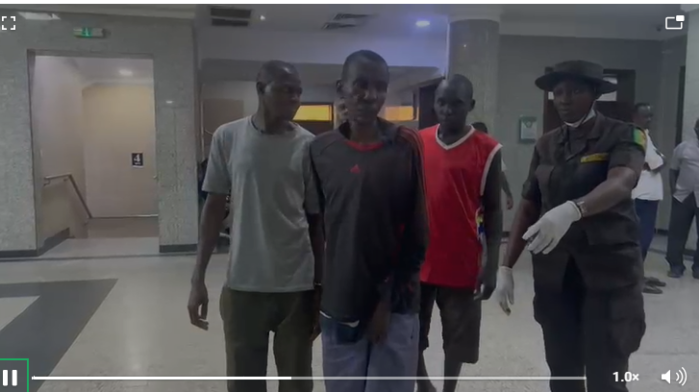
A Federal High Court in Abuja has sentenced several individuals linked to Boko Haram and its splinter groups to various prison terms, as part of ongoing mass terrorism trials initiated by the Federal Government.
The sentences range from 10 to 40 years, with some of the convicts also ordered to undergo rehabilitation and de-radicalisation.
Nigeria continues to confront persistent terrorism threats, particularly in the North-East, with authorities intensifying efforts to prosecute suspects through special court sessions set up within the Federal High Court.
The ongoing trials, coordinated by the Office of the Attorney General of the Federation and Minister of Justice, Lateef Fagbemi, are part of a broader strategy to fast-track terrorism-related cases and strengthen accountability.
In one of the rulings, Justice Binta Nyako sentenced Hamatu Modu to 40 years in prison on a four-count charge for supplying food and sensitive information to Boko Haram fighters.
The court handed down 10 years on each count, to run concurrently.
Another defendant, Isa Ali, was sentenced to 10 years imprisonment after pleading guilty to providing clothing and logistics support to terrorists.
The court struck out one of the charges and ordered that his sentence run from the date of arrest, also directing that he undergo rehabilitation and de-radicalisation, noting he had already spent about three years in custody.
Similarly, Abdullahi Ali received a 20-year sentence after admitting to supplying fuel to ISWAP fighters.
The court considered his plea for leniency but upheld the conviction.
Auwal Bello was also jailed for 10 years for financing terrorism, including facilitating transactions estimated at over seven hundred and fifty thousand naira during the naira swap policy, and paying levies to the group.
In another case, Shehu Bukar was sentenced to 20 years imprisonment after admitting to supporting terrorist operations through cattle rustling and supply of livestock.
The court described the offence as “gruesome” despite pleas for mercy on grounds of being a first-time offender.
In addition to custodial sentences, the court ordered rehabilitation programmes for some of the convicts as part of efforts to de-radicalise offenders.
With about ten courtrooms currently handling over one hundred terrorism-related cases simultaneously, authorities say the mass trials reflect a coordinated push to strengthen Nigeria’s counter-terrorism response and deliver justice to victims of insurgency.