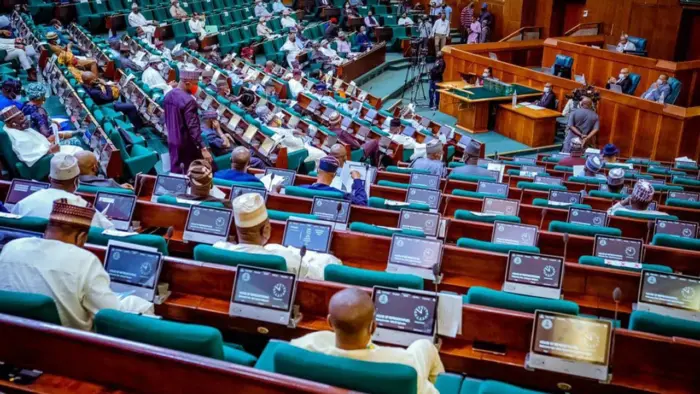
Twenty-seven members of the House of Representatives defected from their parties on Tuesday, with the All Progressives Congress (APC) gaining 14 new members while losing two, further consolidating its majority in the chamber.
Following the defections, the APC now holds about 280 seats, while the People’s Democratic Party (PDP) retains 38 members, maintaining its position as the largest opposition party.
The African Democratic Congress (ADC) increased to 15 members, the Labour Party (LP) now has 12 members, and the New Nigeria Peoples Party (NNPP) was reduced from 18 to five members. Accord and the All Peoples Party (APP) each hold two seats.
At the House inauguration on June 23, 2023, the APC had 181 members, while opposition parties collectively held 179, including 115 from the PDP.
The defectors include key figures such as House Deputy Spokesman Phillip Agbese, who left the APC for the Labour Party citing a protracted crisis in Benue State.
House Deputy Minority Whip George Ozodinnobi led several members from LP to the ADC, while others moved from PDP and NNPP to APC or ADC amid internal party crises.
Notable moves include:
Nine NNPP members, including former Deputy Minority Leader Sani Madaki, defected to APC due to internal disputes linked to the Kwankwasiyya movement.
Several PDP lawmakers from Sokoto, Taraba, Kebbi, Gombe, and Imo states joined ADC or APC.
ADC also gained members from LP and PDP, strengthening its presence in the House.
Madaki cited party crises and factional disputes within NNPP as reasons for his defection, while Ozodinnobi pointed to internal conflicts in the Labour Party that hindered collective pursuit of policy goals.
The mass defection significantly reshapes the balance of power in the House, enhancing the APC’s legislative strength while weakening opposition cohesion.