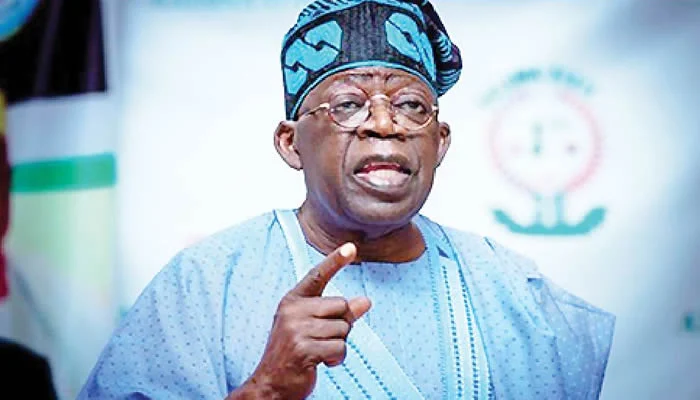
President Bola Ahmed Tinubu has directed all Ministries, Departments, and Agencies (MDAs) to rely on existing electricity sector laws to clearly define how electricity subsidy costs will be shared among the Federal, State, and Local Governments in the 2026 budget.
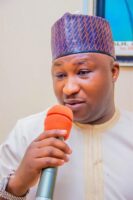
The directive was disclosed by the Director-General of the Budget Office of the Federation, Dr. Tanimu Yakubu, during a keynote address at the opening of a training programme for MDAs on the 2026 post-budget preparation process in Abuja on Monday. The programme focused on the use of the Government Integrated Financial Management Information System and the Budget Preparation System.
Yakubu said the President wants electricity subsidy obligations to be transparent and properly allocated to prevent hidden liabilities within the power sector.
“Subsidy costs must be explicit, tracked and funded, so they do not return as arrears, liquidity crises or hidden liabilities in the power market,” he said.
He explained that whenever any tier of government chooses to keep electricity tariffs low, the financial implications of such a decision must be clearly agreed upon and enforced across all levels.
“It also means that if any tier of government chooses affordability interventions, the funding responsibilities must be clear, agreed, and enforceable. This is not punishment. It is alignment,” Yakubu said.
READ ALSO: JUST IN: Tinubu Arrives Abuja from Türkiye Visit
According to him, a fair distribution of subsidy costs will improve accountability and encourage stronger commitment to reforms in the electricity sector.
“When everyone carries a fair share of the cost, everyone also has an incentive to support cost-reflective efficiency, targeted protection for the vulnerable, and a power market that can actually deliver,” he said.
Yakubu told MDAs that electricity subsidy costs must now be fully reflected in their budget proposals, warning against shifting unpaid obligations into the power market where they later surface as debts affecting operators and consumers.
Beyond electricity subsidies, Yakubu said the Federal Government is tightening project selection standards in the 2026 budget. He stressed that only projects that are ready for implementation—and where necessary, capable of attracting financing—will be included.
“If it cannot be implemented, it should not be proposed. If it cannot be measured, it should not be defended,” he said.
He cautioned that long lists of poorly prepared projects often fail to deliver meaningful outcomes for citizens.
Read Also
“A long list of projects is not a development strategy. It is often a map of disappointment. What citizens feel is delivery—completed roads, reliable power, functional schools, working hospitals,” Yakubu said.
The budget chief explained that the government is shifting focus to proper project financing, requiring each project to be fully planned, costed, and linked to a clear funding source, whether from the federal budget, private-sector partnerships, or other financing options.
Yakubu said MDAs must demonstrate project readiness by providing designs, approvals, procurement plans, timelines, and clear explanations of funding sources and expected results.
On fiscal discipline, he revealed that President Tinubu has ordered a review of the Fiscal Responsibility framework to strengthen it and align it with current economic realities.
“Fiscal rules are not a slogan. They are the guardrails of the government. Without guardrails, spending becomes impulsive, debt becomes casual, and the budget becomes a statement of intent rather than a tool of delivery,” he said.
He noted that the review would introduce clearer spending limits, stronger reporting standards, better control of fiscal risks, and closer integration between long-term plans and annual budgets.
“For MDAs, this changes the conversation. You will not only be asked what you want to spend. You will be asked how it fits the fiscal rules, how it affects sustainability, and what measurable results it will deliver,” Yakubu said.
He urged MDAs to align proposals with available resources, clearly define priorities, and disclose risks, particularly future costs that could burden government finances.
Yakubu also reiterated that electricity subsidies can no longer be treated as a responsibility of the Federal Government alone.
“Let me be direct. If we want a stable power sector, we must pay for the choices we make. When tariffs are held below cost, a gap is created. That gap is a subsidy. And a subsidy is a bill,” he said.
He added that when multiple tiers of government benefit from such decisions, the costs must be shared transparently and fairly.
Yakubu said all proposals submitted under the 2026 budget will be rigorously assessed to ensure they align with national priorities, are implementable, provide value for money, and comply with fiscal limits.
According to him, the overarching objective is to ensure the 2026 budget delivers tangible results for Nigerians by completing projects and addressing real challenges, rather than producing long lists of initiatives that never materialise.