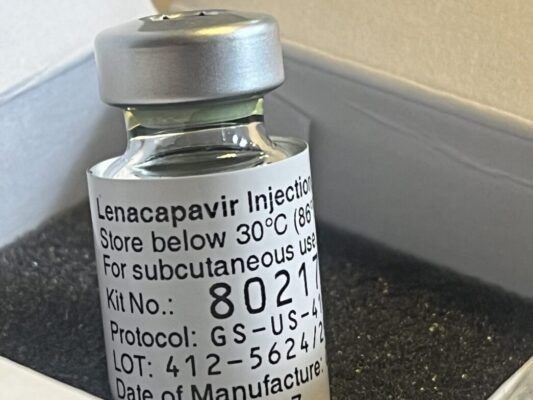
South Africa has begun administering lenacapavir, a twice-yearly, long-acting HIV prevention injection, to selected participants in a new study spearheaded by Wits RHI at the University of the Witwatersrand, with funding from Unitaid.
The rollout marks a major milestone, coming just five months after the US Food and Drug Administration approved lenacapavir for HIV prevention.
The drug has delivered exceptional outcomes in clinical trials, providing near-total protection against HIV and outperforming all currently available pre-exposure prophylaxis (PrEP) options.
Although initially expected to cost about $28,000 per person annually, access to the drug has dramatically improved following a pricing agreement led by the Clinton Health Access Initiative (CHAI) in partnership with Dr Reddy’s Laboratories, Unitaid, the Gates Foundation and Wits RHI.
READ ALSO: Lagos Begins Free HIV Testing For 2025 World AIDS Day
The deal has reduced the price to roughly $40 a year, paving the way for its use in low- and middle-income countries.
Unitaid said on Monday that the ongoing study will help South Africa’s health department gather the real-time evidence needed to successfully integrate lenacapavir into national HIV prevention programs.
Read Also
“These early learnings on real world use will also be applicable to other countries adopting lenacapavir,” the statement reads.
“Making new medicines widely available in low- and middle-income countries can take up to a decade or longer as regulatory approvals must be obtained, manufacturing must be secured, and prices must come down.
“Global momentum behind lenacapavir has set the drug on a rapid trajectory: South Africa registered the drug in record time in late October, followed by Zambia in November, and the first doses have already been delivered in Zambia and Eswatini through The Global Fund and PEPFAR. Broader rollout in early adopter countries is expected in early 2026.”
Aaron Motsoaledi, South Africa’s minister of health, said the country is working with relevant stakeholders to make lenacapavir available to the most vulnerable populations who are at higher risk of HIV infections.
“These early efforts from Unitaid and Wits RHI will help us fine-tune how lenacapavir is delivered through our health system so we can reach as many people as possible with this new Pre-Exposure Prophylaxis (PrEP) option, especially adolescent girls, young women, and pregnant and breastfeeding women,” he said.
A parallel study is currently underway in Brazil, led by Fiocruz.
Findings and resources from the Fiocruz project are expected to shape implementation plans both within Brazil and across the wider Latin American region.