
Dateline: Ijebu-Ode, Ogun State | May 29, 2026
7:15 a.m. – A City Awake
Ijebu-Ode was already bustling before sunrise as thousands of visitors and indigenous prepared for the 2026 Ojude Oba Festival. Hotels across the city were fully booked, while major roads witnessed an early influx of participants dressed in colourful traditional attire.
Victor Offoga details the first Ojude Oba without an Awujale.
ADVERTISEMENT
From my hotel balcony along Ibadan Road, the atmosphere reflected the anticipation surrounding this year’s event. The sounds of talking drums, conversations, and movement filled the air as age-grade groups, families, and visitors made final preparations for the day’s activities.
This year’s festival carried special significance as it was the first edition since the passing of the late Awujale of Ijebuland, Oba Sikiru Kayode Adetona. Despite the absence of the revered monarch, residents appeared determined to celebrate his legacy and preserve the cultural institution he helped strengthen during his reign.
8:30 a.m. – Gathering at the Pavilion
Security personnel, including officers of the Nigeria Police Force, the Federal Road Safety Corps and local security groups, maintained order around the Ojude Oba Pavilion as guests arrived.
Inside the arena, dignitaries occupied the VIP section. Among those present were Ogun State Governor Dapo Abiodun, Seyi Tinubu, and the Minister of Art, Culture, Tourism and the Creative Economy, Hannatu Musawa.
ADVERTISEMENT
With the Awujale stool currently vacant, members of the Awujale Interregnum Council, led by Chief Sunny Kuku, received tributes and greetings on behalf of the kingdom.
Many attendees described the occasion not as a period of mourning but as a celebration of continuity and cultural resilience.
11:00 a.m. – Regberegbe Take Centre Stage
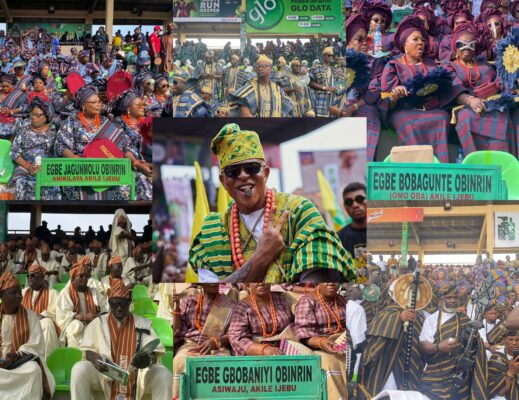
The parade of Regberegbe (age-grade groups) once again emerged as one of the festival’s highlights.
One after another, the groups entered the arena in coordinated traditional attire, showcasing the rich cultural heritage of the Ijebu people. Women adorned in elaborate Aso-Oke fabrics, coral beads and colourful accessories attracted applause from spectators, while their male counterparts displayed equally impressive fashion statements.
ADVERTISEMENT
The event demonstrated the enduring relevance of the age-grade system in promoting community participation and social cohesion among the Ijebu people.
Participants travelled from different parts of Nigeria and the diaspora to be part of the annual gathering.
1:15 p.m. – The Return of a Festival Icon
Excitement reached a peak when businessman Farooq Oreagba arrived on horseback.
Farooq Oreagba, whose appearance at previous editions gained widespread attention on social media, was warmly received by the crowd. Dressed in a white stylish traditional outfit and displaying his characteristic confidence, he once again became one of the most photographed personalities at the festival.
ADVERTISEMENT
This year’s appearance carried added significance as he was accompanied by his son, Jamal Oreagba. Their joint horseback procession quickly became one of the defining moments of the day, symbolising the transmission of cultural values from one generation to the next.
2:30 p.m. – The Horse Riders’ Display
The traditional equestrian parade by Balogun and Eleshin families brought energy and excitement to the afternoon programme.
Representing families historically associated with the defence of the old Ijebu Kingdom, horse riders entered the arena in large numbers, accompanied by drummers, praise singers and supporters.
Among the notable participants was the Fasasi Adesoye Dynasty, whose procession attracted significant attention. Their elaborate display featured numerous horse riders and traditional performances.
ADVERTISEMENT
The participation of Nollywood actors Ibrahim Chatta and Taiwo Hassan, popularly known as Ogogo, further heightened public interest. Both actors joined the procession, drawing cheers from spectators and festival guests.
Traditional gun salutes, chants and horse-riding demonstrations transformed the arena into a vivid display of history and cultural identity.
4:00 p.m. – Ogun Government Commends Cultural Preservation
Addressing attendees, Governor Dapo Abiodun described the festival as a symbol of continuity and cultural preservation.
According to the governor, proceeding with the festival despite the ongoing royal transition demonstrated the strength of the institution and the determination of the Ijebu people to sustain their heritage.
ADVERTISEMENT
He also highlighted the economic benefits of the event, noting its impact on hospitality businesses, transport operators, traders and artisans.
Several local vendors confirmed increased patronage, with many reporting strong sales in the weeks leading up to the celebration.
6:30 p.m. – The Celebration Continues
Although the official programme concluded in the evening, festivities continued across Ijebu-Ode.
Street gatherings, live music performances and food vendors attracted residents and visitors alike. The sounds of juju music, fuji and contemporary Afrobeats echoed through different parts of the town as people extended the celebrations late into the night.
ADVERTISEMENT
Reflecting on the day’s events, it became evident that Ojude Oba remains far more than a cultural festival. It serves as a platform for preserving tradition, strengthening communal bonds and showcasing the identity of the Ijebu people to a global audience.
The 2026 edition will likely be remembered not only as the first festival held after the passing of Oba Sikiru Adetona but also as a powerful demonstration that the institution and traditions he nurtured continue to thrive.
End of Diary
ADVERTISEMENT
ADVERTISEMENT
ADVERTISEMENT
ADVERTISEMENT