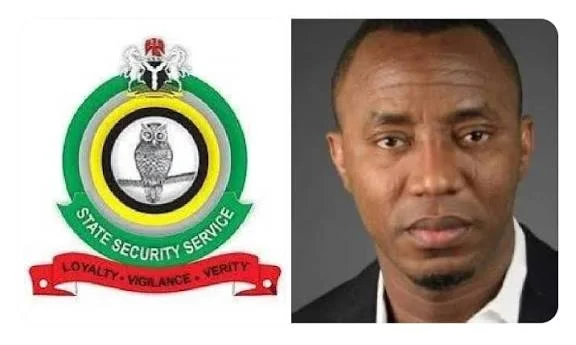
The Department of State Services (DSS) has said its decision to prosecute online publisher and politician, Omoyele Sowore, was based on the perceived security implications of a social media post in which he described President Bola Tinubu as a criminal.
Sowore is currently facing trial before the Federal High Court in Abuja for allegedly making false claims against the President through posts on his X (formerly Twitter) and Facebook accounts. The DSS contends that the post constituted a threat to national security.
An official of the DSS, Cyril Nosike, gave the explanation on Tuesday while being cross-examined by Sowore’s lawyer, Marshall Abubakar.
The defence had played a video in court showing President Tinubu promising to tolerate criticism and name-calling, and asked why the DSS still proceeded with the charge.
In response, Nosike maintained that the agency acted because of the security implications of Sowore’s post, not necessarily on behalf of the President.
He said the video referenced by the defence was recorded during a state visit to Brazil, but admitted he was not present at the time and did not personally record it.
Read Also
READ ALSO: DSS Amends Cybercrimes Charges Against Omoyele Sowore
Nosike told the court that he downloaded the video from Sowore’s social media page and did not know when or by whom it was recorded. He also confirmed that he did not interview President Tinubu or obtain any statement from him concerning the video or the alleged defamatory post.
The witness further admitted that the DSS did not receive any formal complaint from the President and that he was unaware whether the President was even aware of Sowore’s post. Despite this, he said the DSS considered the President the victim in the matter.
During the proceedings, Nosike said he was unaware of Sowore’s previous trial in 2019 for allegedly calling for a revolution, and also claimed ignorance of any court judgment ordering the DSS to release Sowore’s mobile phones seized since that period.
At that point, Abubakar tendered a certified true copy of a court order issued on February 19, 2024 by Justice Emeka Nwite, which directed the DSS to return Sowore’s phones. The document was admitted in evidence by Justice Mohammed Umar.
The defence also submitted a flash drive containing several video clips, including one showing President Tinubu promising to protect the rights of all Nigerians, and another featuring Reno Omokri, now an ambassador-designate, calling Tinubu a drug lord during the last election campaign. The videos were played in open court.
When asked why the DSS cleared Omokri for ambassadorial appointment despite his past remarks, Nosike said he could not explain the agency’s screening process for government appointees.
The case was adjourned, with further hearing scheduled for February 4.