
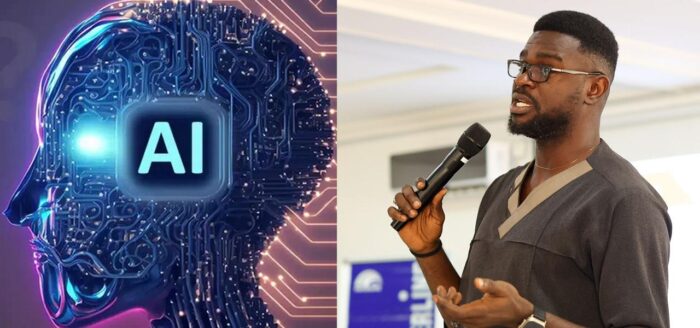
Digital business consultant and technology strategist, Alabi Alexander Olalekan, has urged the Federal Government to prioritise artificial intelligence (AI) education as a national development imperative, warning that Nigeria may continue losing its brightest innovators to foreign markets if decisive action is not taken.
Speaking in an exclusive interview, Olalekan said the country stands “at a critical crossroads’’ with over 60 percent of its population under the age of 25 but without the structured training, incentives and innovation infrastructure needed to retain emerging talent.
“We are not lacking brilliance in Nigeria. What we lack is the infrastructure and opportunity to keep that brilliance here,” he said, stressing that AI should now be treated as “basic literacy” within the national school system.
Olalekan noted that fewer than one percent of Nigerian universities offers formal AI or data-science programmes, forcing many young people to rely on informal channels such as YouTube tutorials, online bootcamps or peer learning groups.
While commending initiatives like AltSchool Africa, Zindi Africa and the government’s 3 Million Technical Talent (3MTT) programme, he said current efforts “reach only a fraction of the youth population.”
Read Also
Olalekan expressed concern over the rising migration of digital professionals, with over 20,000 Nigerian tech workers reportedly relocating in the last two years due to limited career pathways, unstable infrastructure and economic uncertainty.
“When an AI engineer leaves, we don’t just lose coders. We lose problem-solvers the very people who could develop early-warning flood systems, local-language health chatbots or smarter learning platforms.
“To continue exporting our best minds is to weaken our long-term competitiveness as a nation,” he said. Olalekan in proffering solutions, outlined urgent policy actions to strengthen the country’s AI pipeline and reduce youth migration. He urged the government to integrate AI into the national curriculum from secondary school, with emphasis on practical, locally relevant applications.
“There is also the need to invest in scalable EdTech platforms such as uLesson and Afrilearn that deliver personalised learning even in low-connectivity environments. Incentivise local employment through tax breaks and grants for firms hiring Nigeria-trained AI professionals. Strengthen the 3MTT programme through transparent funding, consistent evaluation and deeper collaboration with technology hubs. Empower women in AI through targeted scholarships and mentorship in underserved communities.
“These steps, even if implemented halfway, could transform our youth from job seekers into innovators contributing meaningfully to Nigeria’s future,” he said.