The Federal Ministry of Livestock Development has reaffirmed its commitment to building strong partnerships with private sector operators and stakeholder groups to strengthen animal health services, boost productivity, and expand opportunities across Nigeria’s livestock value chains.
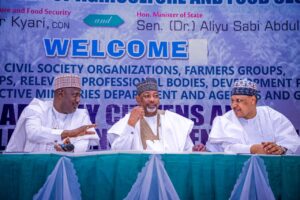
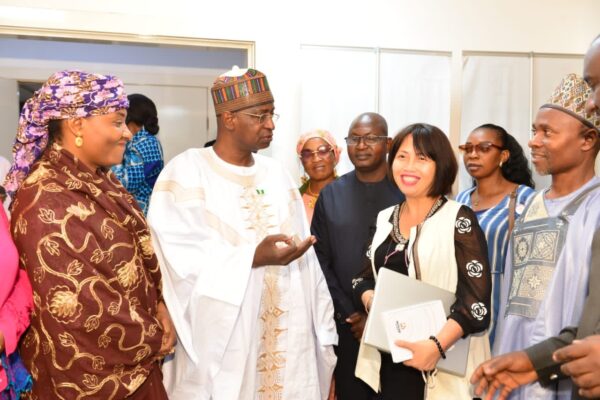
According to a statement shared on the Ministry’s official X handle, this was discussed during a separate courtesy visit to the Ministry by delegations from Ambuvet Konsult Nigeria Limited, Hybrid Feeds Limited, and the Women and Youth in Livestock Development and Food Network Nigeria (WYLAF), who expressed interest in collaborating with the Ministry to advance livestock development in the country.
Leading the first delegation, the Team Lead of Ambuvet Konsult Nigeria Limited, Dr Shehu Shamsudeen, presented the organisation’s model for delivering animal health services to livestock farmers, particularly in underserved rural communities.
According to him, Nigeria’s livestock sector holds enormous potential but continues to face constraints such as limited rural veterinary coverage, inconsistent vaccine access, and preventable livestock diseases that suppress productivity and incomes among smallholder farmers.
“We all know that Nigeria has one of the largest livestock populations in Africa, and demand for livestock products continues to grow. However, one of the major constraints is the last-mile delivery of animal health services. In many livestock-producing communities, animals still die from preventable diseases simply because veterinary services are not readily accessible,” he said.
Dr Shamsudeen explained that Ambuvet has developed a network of community-based animal health workers, veterinary paraprofessionals, and agro-vets to bridge the last-mile service gap. Through this model, the organisation has supported over 100,000 smallholder livestock farming households across Nigeria with veterinary services, vaccination campaigns, advisory support, and access to animal health products.
He also highlighted several public-private partnership initiatives implemented with development partners and state governments, including vaccination campaigns that reached more than 14,000 livestock-producing households, covering over 60,000 small ruminants and 5,000 local chickens.
Dr Shamsudeen noted that the organisation sees strong alignment between its work and the Federal Government’s livestock reform agenda, adding that structured public-private partnerships could significantly strengthen disease control, vaccination programmes, and veterinary service delivery nationwide.
In his response, the Honourable Minister of Livestock Development, Idi Mukhtar Maiha, emphasised that collaboration between government and private sector actors is essential to building a resilient livestock ecosystem.
“You realise that the Ministry alone cannot intervene in disease control, vaccination, surveillance, data capturing and many other critical areas. The best way to achieve results is through collaboration. There is enough fertile ground for the government and the private sector to work together for the benefit of our livestock farmers,” the Minister said.
He further stressed the need to strengthen veterinary infrastructure and human capacity across the country. “We need to build the capacity of veterinary paraprofessionals and community animal health workers, especially now that we are expanding veterinary clinics and model veterinary hospitals. These facilities must be supported by skilled personnel who can deliver services effectively to livestock producers,” he added.
In a separate meeting, the Managing Director/Chief Executive Officer of Hybrid Feeds Limited, Dr Leye Alayande, briefed the Minister on the company’s contributions to livestock production through the manufacturing and supply of quality livestock feeds.
He disclosed that Hybrid Feeds, with over 20 years of industry experience, operates modern feed production facilities in Kano, Kaduna, and Asaba.