
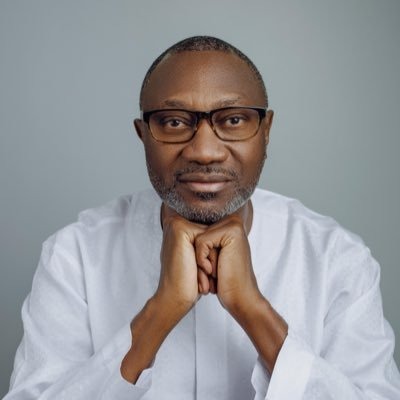
Group Chairman of First Bank Nigeria Holdings Plc, Femi Otedola, has defended the bank’s decision to take a ‘one-time hit’ of N748 billion to provision for legacy non-performing loans, describing the move as a strategic step toward long-term stability despite the resulting 92% dip in reported profits.
In a Saturday statement on his official X handle, Otedola explained that, rather than pretending the loans do not exist, the company decided to close what he described as “the chapter on messy loans from past years”, to help rebuild investors’ and customers’ trust.
Otedola disclosed that the decision was aligned with the Central Bank of Nigeria’s directive for banks to address non-performing loans transparently rather than defer the problems.
He wrote, “At First HoldCo, we decided to clean house properly. We took a huge one-time hit of ₦748bn to admit old bad loans instead of pretending they do not exist. That is why profit looks like it crashed by 92%. Painful headline, but it is a serious long-term move.
“Why do this now? Because the @cenbank is pushing banks to stop kicking problems down the road. So First HoldCo basically closed the chapter on messy loans from past years, which sends a clear message that borrowing has consequences and it helps rebuild trust.”
The billionaire business explained that the bank recorded N2.96tn in interest income and N1.91tn in net interest income, which provided the financial capacity to absorb the cleanup while maintaining operational stability.
Otedola further projected that the cleanup has positioned First Bank favourably for the recapitalisation exercise and future growth.
“The key point is this: our business itself is STILL strong. It made N2.96tn in interest income and N1.91tn in net interest income, which gave it the strength to take the cleanup and still stay standing,” he stated.
“Now at First Bank and beyond, we go into 2026 lighter, cleaner and better prepared for the recapitalisation era and serious growth. Bad loans cleared + strong income engine + long-term thinking = real value creation,” he concluded.