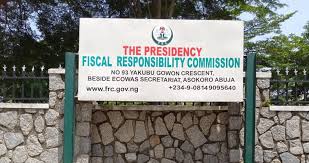
The Federal Government has warned state and local governments against obtaining loans from financial institutions without securing a Certificate of Proof of Compliance from the Fiscal Responsibility Commission (FRC), saying such borrowing is unlawful and carries serious legal consequences.
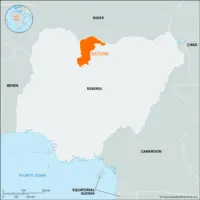
The warning was issued during a financial management workshop attended by 23 local government chairmen in Kaduna.
Speaking at the event, the FRC’s Director of Legal Services, Investigation and Enforcement, Charles Abana—who represented the Executive Chairman, Victor Muruako—said the Fiscal Responsibility Act of 2007 does not permit states and local governments to borrow funds for recurrent or day-to-day expenses.
He explained that any borrowing must be tied to projects with long-term value, such as infrastructure and human development, rather than routine government spending.
In a statement by its Strategic Communication Officer, Bede Anyanwu, the commission described the practice of spending public funds outside approved budgets as “fiscal haram,” warning that it undermines public trust and slows national development.
The FRC also cautioned local government leaders against diverting public funds to associates, political supporters or unverified workers on government payrolls, stressing that all expenditures must align with approved budgets and deliver measurable public benefit.
It further warned financial institutions, particularly banks, against granting loans in violation of fiscal laws, noting that public officers who disregard the rules risk severe sanctions.
The commission urged council chairmen to promote transparency, prudent financial management and long-term accountability in governance, while offering technical support to help local governments strengthen fiscal responsibility frameworks.
Governor Uba Sani was commended for supporting reforms that advance transparency and accountability. He, in turn, condemned the misuse of public funds and called on public officials to demonstrate honesty and openness in service, emphasising that public trust depends on responsible financial management.
Earlier, the Executive Chairman of the Kaduna State Fiscal Responsibility Commission, Sani Bako, described the workshop as a key step toward improving public financial management at the local level. He acknowledged the participation of agencies including the Code of Conduct Bureau, the Economic and Financial Crimes Commission, the Bureau of Public Procurement, and the Centre for Fiscal Transparency and Public Integrity.
Bako added that strong fiscal governance is essential for sustainable development, improved infrastructure, better schools, cleaner communities and overall economic growth, noting that presentations at the workshop focused on ethical leadership, due procurement processes and anti-corruption measures.