
The Federal Government has intensified efforts to tackle poverty under its Renewed Hope Agenda, with plans to reach 15 million vulnerable households through the Household Prosperity and Empowerment Cash Transfer Programme (HoPE-CT).
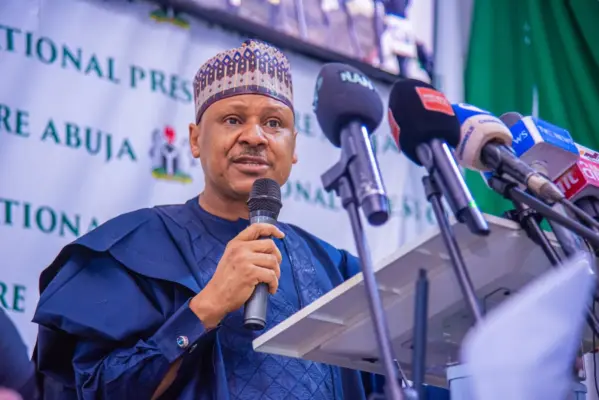
The Minister of Information and National Orientation, Mohammed Idris, disclosed this on Monday in Abuja during the HoPE-CT Implementation Briefing and Press Conference. Represented by the Director of Public Relations and Protocol, Dr Suleiman Haruna, the Minister said the programme had already reached over 9.2 million beneficiaries nationwide.
He described HoPE-CT as one of the most ambitious social intervention initiatives of the current administration, noting that it provides critical financial support to millions of Nigerians at the grassroots.
According to him, the scheme includes special uplift grants of ₦50,000 for 3.6 million households, aimed at strengthening livelihoods and accelerating poverty reduction.
Idris said the initiative goes beyond numerical targets, stressing that it represents renewed hope, dignity and improved living conditions for vulnerable citizens.
“The HoPE-CT programme is about restoring hope, expanding opportunities and laying the foundation for inclusive prosperity. It demonstrates that government is attentive to the needs of its citizens, especially those at the grassroots,” he said.
He urged the media to move beyond reporting figures and instead highlight the human impact of government interventions, calling for compelling, factual and non-partisan storytelling that reflects real-life transformations.
“As storytellers, the media must amplify the human angle of these interventions, showcasing before-and-after experiences that rekindle hope among Nigerians and strengthen trust in government,” he added.
The Minister reaffirmed that poverty reduction remains central to the administration’s agenda and called for sustained collaboration between the media and government institutions to effectively communicate policies and programmes.
He also outlined other key social intervention initiatives, including the reconfigured National Social Investment Programme, which now offers non-collateral, interest-free loans of between ₦300,000 and ₦400,000 to youth and women through cooperatives, alongside a revised N-Power scheme.
The Student Loan Scheme, he said, has approved over ₦95.6 billion to support students in higher institutions, while the Government Enterprise and Empowerment Programme continues to provide microloans to traders and small-scale entrepreneurs under schemes such as TraderMoni.
Other initiatives include the 3 Million Technical Talent Programme, aimed at equipping Nigerians with digital skills, and the Skill-Up Artisans Programme, which focuses on upgrading artisans’ capabilities through technology-driven training.
He added that the National Home-Grown School Feeding Programme has been repositioned to boost school enrolment and support local farmers, while the Consumer Credit Scheme, backed by over ₦200 billion, enables citizens to acquire goods on credit.
The Compressed Natural Gas initiative is also being implemented to reduce transportation costs, while livelihood support grants are being extended to 600,000 micro-businesses nationwide. In addition, the LUMINAH 2030 initiative is designed to empower over one million women and girls through education and vocational training.
Idris assured that the Ministry of Information and National Orientation would continue to work with relevant agencies to enhance public awareness and engagement on government programmes.
“As we receive feedback and fine-tune implementation, we will continue to listen, learn and deliver. Together, we must keep building a Nigeria where no one is left behind,” he said.
Representatives of ministries, development partners and other stakeholders were in attendance at the briefing.