
The Minister of Women Affairs and Social Development, Hajiya Imaan Sulaiman-Ibrahim, has charged Nigeria’s traditional rulers to take stronger leadership roles in the national fight against Sexual and Gender-Based Violence (SGBV), describing them as the “first line of defence” for vulnerable women and girls.
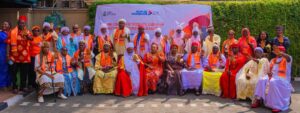
Speaking in Abuja at the National Convening of Traditional Leaders on GBV Prevention and Experience Sharing, held as part of the 2025 16 Days of Activism Against Gender-Based Violence, the Minister—through her Special Adviser on Media and Publicity, Mr. Jonathan Eze—said the presence of traditional leaders at this moment in the country’s history reflects clarity, courage and collective resolve.
Addressing monarchs, cultural custodians, civil society organisations and advocates, Sulaiman-Ibrahim highlighted the scale of Nigeria’s GBV crisis, noting that one in three Nigerian women is likely to experience gender-based violence, with 70 percent of cases occurring in homes and often committed by intimate partners or trusted persons.
“We remember the lives lost. We honour survivors. And we reaffirm our commitment to building a Nigeria where every woman and girl can live free from fear,” she said.
The Minister acknowledged significant national progress, including the successful domestication of the Child Rights Act in all 36 states and the FCT, and the VAPP Act in 35 states and the FCT.
She described these laws as critical protective instruments but warned that legislation alone is insufficient without cultural integration.
“For legal frameworks to translate into protection, they must be embedded within our cultural norms. This is why your leadership as traditional rulers is indispensable,” she noted.
Sulaiman-Ibrahim announced the commencement of a National Audit on Women’s Inclusion in Traditional Governance, aimed at tracking women’s representation, identifying gender-inclusive communities, and pinpointing areas requiring urgent reform.
She stressed that no nation can sustainably reduce gender-based violence while excluding women from leadership.
The Minister also reiterated support for the push for Special Parliamentary Seats for women, stating that increased women’s representation—whether in parliament or traditional councils—strengthens policies that address the needs of women and girls.
Aligning the GBV campaign with President Bola Ahmed Tinubu’s Renewed Hope Agenda, she emphasized the government’s commitment to family stability and inclusive development.
She referenced women-focused initiatives such as the Women Agro-Value Expansion (WAVE) Programme targeting 10 million women, the Solar Home Lighting Programme for 500,000 women, and the national transition to Clean Cooking Solutions, which protects over 98,000 women and children annually.
According to her, these interventions will achieve deeper impact through stronger partnerships with traditional institutions.
Sulaiman-Ibrahim further revealed that Nigeria is set to launch the 3rd National Action Plan (NAP III) on UN Security Council Resolution 1325, which recognises traditional rulers as central actors in preventing conflicts, harmful cultural practices and violence.
“You are the moral compass of our nation, the guardians of cultural identity, and the first line of defence for the vulnerable. Nigeria cannot defeat gender-based violence without you,” she declared.
She called on monarchs to extend GBV advocacy beyond national platforms into palaces, traditional councils, cultural gatherings and community dialogues, insisting that communities must embrace zero tolerance for GBV as a cultural standard.
As the world observes the 16 Days of Activism, the Minister urged that the convening should inspire sustained action for protection, accountability and dignity. “May our actions reflect the Nigeria we strive to build: a nation where culture protects, not harms; where leadership uplifts, not oppresses; and where every woman and girl can live free from violence,” she concluded.
The convening brought together traditional leaders from kingdoms, emirates, chiefdoms and councils across Nigeria who shared experiences and strategies aimed at building safer, more inclusive communities.