The Federal Government has inaugurated the Core Working Group (CWG) on Regional Development, marking a key step in the implementation of President Bola Tinubu’s Renewed Hope Agenda.
The CWG is designed to drive coordinated and harmonised implementation of the regional development initiative across the federation, providing technical leadership, strategic alignment and operational oversight for the programme.
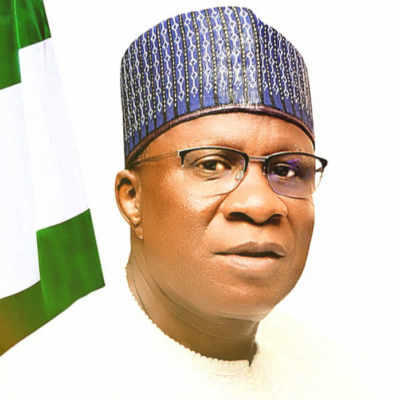
Inaugurating the group in Abuja, the Minister of Regional Development, Mr Abubakar Momoh, said the initiative reflected President Tinubu’s commitment to balanced growth and inclusive national development.
Momoh described regional development commissions as strategic instruments for addressing long-standing development gaps while responding to evolving socio-economic and security challenges across the country.
Represented by the Minister of State, Federal Ministry of Regional Development (FMRD), Mr Uba Ahmadu, the minister reaffirmed the ministry’s commitment to the effective coordination and smooth operation of the Regional Development Commissions (RDCs) to improve the wellbeing of Nigerians.
Ahmadu urged the CWG to develop a practical and responsive policy framework that reflects the diverse needs of the regions and inspires confidence among stakeholders.
He said the group’s work must be guided by a region-by-region approach that reflects local realities, priorities and comparative advantages, while aligning with national development plans and global best practices to ensure sustainability beyond political cycles.
Also speaking, the Senior Special Assistant to the President on Regional Development, Dr Mariam Masha, expressed the presidency’s full support for the CWG and the ministry, describing the inauguration as a decisive shift from “strategy to execution”.
She said the Renewed Hope Agenda aims to reduce long-standing disparities in economic opportunity and human development by promoting inclusive growth across all regions, stressing that effective regional development must be rooted at the grassroots level.
Masha added that the Office of the Vice President – Regional Development Programmes (OVP-RDP) would provide strategic support to ensure efficiency and measurable impact across four pillars: productive economy, social development, infrastructure and connectivity, and peace and security.
The Permanent Secretary of the ministry, Dr Mary Ogbe, said regional development was central to reducing inequality, fostering social cohesion and unlocking economic opportunities nationwide.
She said the inauguration of the CWG established a dedicated team to drive the design, coordination and implementation of key regional development policies and programmes, adding that a two-day training had been organised to promote a results-based and rights-focused approach.
Ogbe urged participants to remain fully engaged, noting that the quality of development outcomes would depend on the capacity and commitment built collectively.
In her remarks, the UNICEF Country Representative in Nigeria, Ms Wafaa Abdelatef, described the inauguration as a significant step towards an equitable and resilient future for Nigeria’s children.
Represented by UNICEF Chief of Social Policy, Dr Hamidou Poufon, Abdelatef reaffirmed UNICEF’s support for the CWG, with a focus on fairness, inclusion and resilience, particularly in advancing children’s rights, gender equality, disability inclusion and youth participation.
Similarly, the United Nations Resident and Humanitarian Coordinator in Nigeria, Mr Mohammed Fall, said development must focus on people and ensuring no one is left behind.
Represented by UN consultant Maryam Uwais, Fall expressed the UN’s support for Nigeria’s regional development efforts through technical leadership, capacity building and knowledge sharing, in line with the Sustainable Development Goals.